Traditional Crafts and Villages in Hoi An: Heritage and Visits
Hoi An features four traditional craft villages, a lantern street and six national intangible heritage crafts. Discover origins, visitor experiences and practical tips.
Table of Contents (4 sections)
Not every traditional trade in Hoi An functions as an open tourist attraction. Some villages are working residential communities where craftsmen labor year-round, while other historic occupations are linked to offshore islands or sea caves without standard visitor facilities. This guide examines each trade based on verified publications: what official records state, which locations welcome travelers, and what practical details to verify before arriving.
Six Crafts Designated as National Intangible Cultural Heritage
The listings and descriptions below are drawn from Bao Van Hoa’s feature “Tracing the Craft Villages of Hoi An” (April 1, 2025), cross-referenced as of October 4, 2026. The original publication noted administrative boundaries prior to July 1, 2025, so the location column retains pre-merger designations as originally recorded.
| Traditional craft | Location (pre-merger unit) | Documented details according to source | Form of visitor engagement noted in source |
|---|---|---|---|
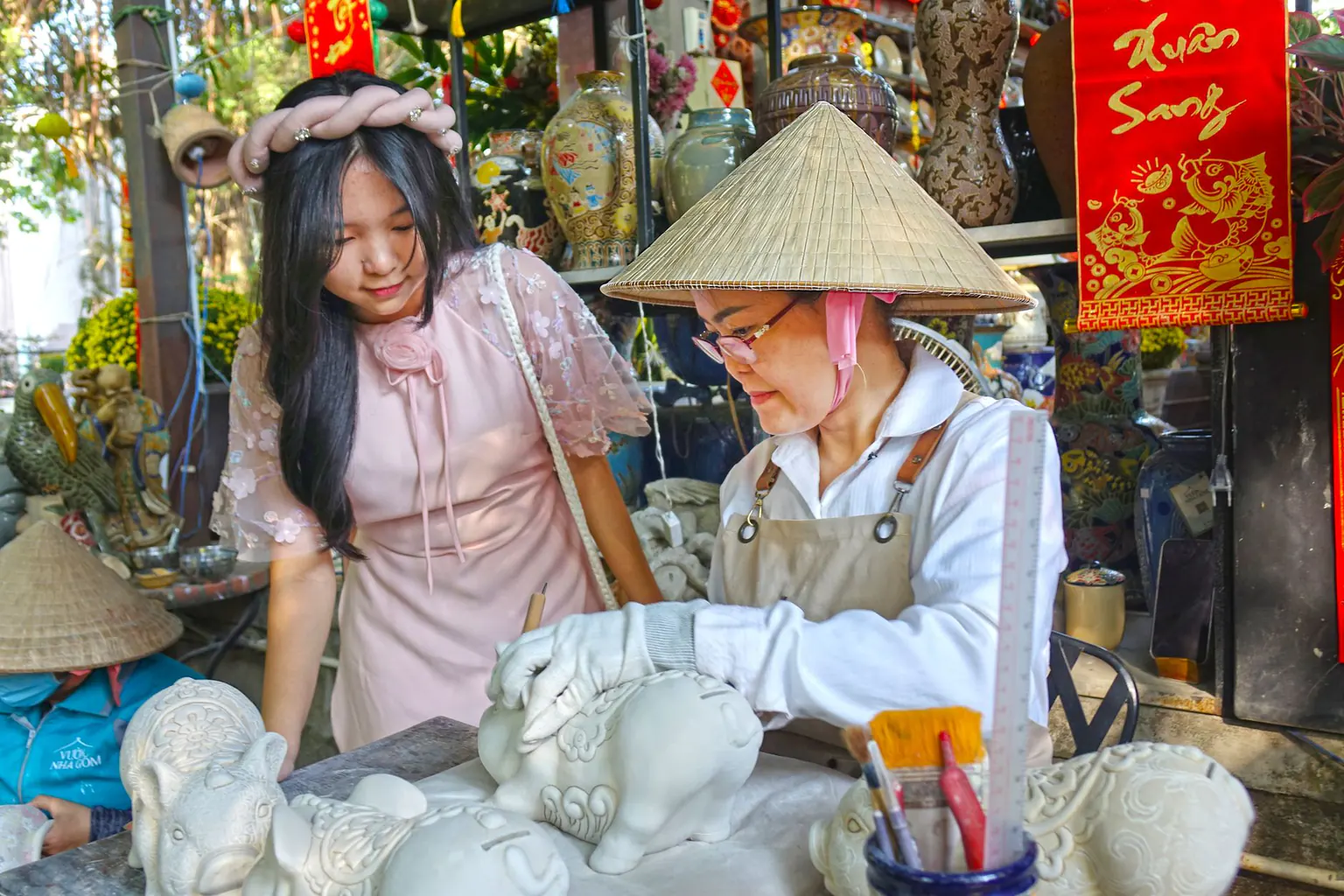
| Thanh Ha pottery | Thanh Ha Ward | Preserves rural village hallmarks: ancient banyan tree, river wharf, communal courtyard; pottery shaped on manual kick wheels and wood-fired | A popular destination where many visitors try hand-shaping clay alongside local artisans |
| Kim Bong carpentry | Cam Kim Commune | Master artisans have for generations served as the core builders and restorers of Hoi An’s heritage architecture; carving done entirely by hand | Source does not document formal tourism reception arrangements |
| Tra Que herb and vegetable cultivation | Cam Ha Commune | 202 farming households, 326 direct agricultural workers, 18 hectares of cultivated land | “A day as a Tra Que farmer” experiential agricultural program |
| Thanh Chau swiftlet nest harvesting | Cu Lao Cham islands | Harvesting wild swiftlet nests inside sea cliffs; established in the 16th century during the Nguyen Lords era | Source does not document formal tourism reception arrangements |
| Cu Lao Cham red sterculia hammock weaving | Tan Hiep Island Commune | Traditional handicraft preserved and practiced across multiple centuries | Source does not document formal tourism reception arrangements |
| Cam Thanh bamboo and coconut thatch building | Cam Thanh Commune | Utilizing local organic materials for structural building, illustrating ecological adaptation | Eco-tourism exploration in the Bay Mau coconut forest developed in harmony with rural ecology |
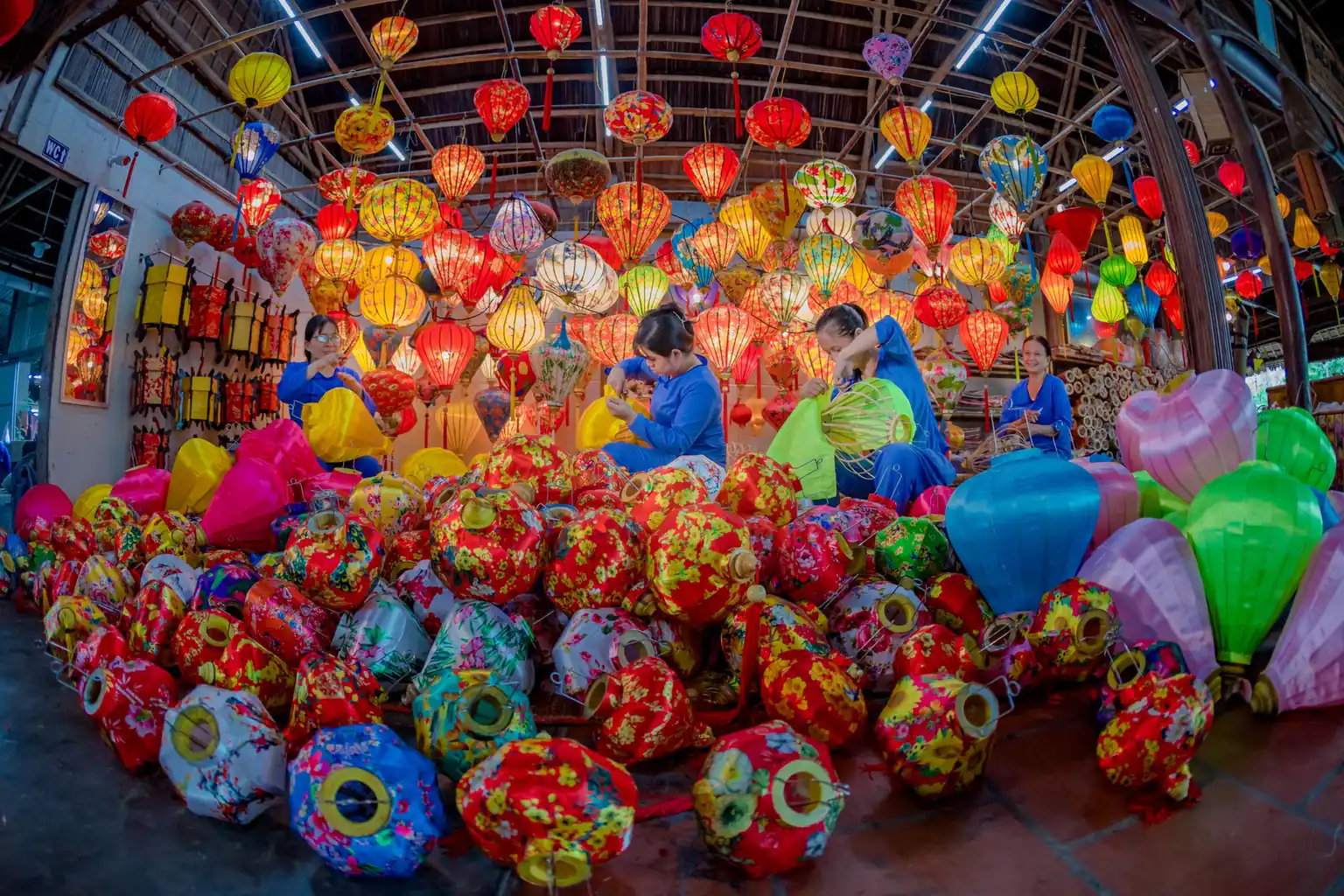
Beyond these six recognized crafts, the report documents the lantern-making craft quarter in An Hoi (formerly Minh An Ward), involving more than 3,000 workers in fabrication and assembly; while dating back centuries, this craft underwent a major revitalization following Hoi An’s first municipal Mid-Autumn Festival in 1998. Bespoke tailoring was likewise highlighted as a craft sector highly favored by international visitors.
Regarding Tra Que village, VnEconomy (November 16, 2024) reported that the village received the Best Tourism Villages 2024 accolade from UN Tourism, sits approximately 3 km from the heritage core, and had its vegetable cultivation designated as National Intangible Cultural Heritage in April 2022.
Key Questions to Confirm Before Visiting Artisan Villages
- Whether workshops actively welcome visitors. The publication observes that artisans in the same trade often reside together in community clusters where daily life centers on production. Villages are living residential neighborhoods rather than ticketed museums operating on uniform hours. Inquire in advance, particularly if seeking to observe delicate production steps.
- Workshop schedules, session fees, and class duration. The cited publications do not publish standard price sheets or lesson lengths; individual studios set their own arrangements. This guide refrains from naming specific commercial workshops pending formal verification.
- Heritage titles do not equate to commercial service quality. Recognition as national heritage honors the historical trade and its cultural legacy, not the commercial reliability of individual private businesses.
- Administrative naming conventions. Publications before July 1, 2025 refer to “Cam Ha Commune” or “Thanh Ha Ward”; under current urban zoning, Hoi An comprises three wards and one island commune. Provide the village name or studio name to your driver rather than relying solely on administrative wards.
Hoi An and Its Creative City Designation
According to Sai Gon Giai Phong, Hoi An officially joined the UNESCO Creative Cities Network in the category of Crafts and Folk Art in 2023. This designation reflects municipal commitments to heritage preservation and sustainable artisan development rather than serving as an operational endorsement of specific tourist venues.
Selecting Craft Experiences Based on Your Travel Goals
- Observing production techniques and finished pieces: Pottery studios, lantern-making streets, and custom tailoring shops provide the most established visitor accessibility; explore our guides to the Thanh Ha pottery village experience and Hoi An silk weaving and tailoring experience.
- Participating in hands-on workshops: Contact individual studios directly to arrange lesson slots; see our overviews on Hoi An lantern-making workshops and what to ask when choosing a cooking class.
- Exploring rural farming life: Read our dedicated advice on preparing for a visit to Tra Que vegetable village.
To explore other activities beyond artisanal heritage, consult our overview of things to do in Hoi An by interest. For private vehicle transfers from Da Nang, explore our private car from Da Nang to Hoi An.
Frequently Asked Questions About Traditional Crafts in Hoi An
Which traditional craft villages are officially documented in Hoi An?
Bao Van Hoa (April 1, 2025) records four established craft villages (Kim Bong woodworking, Thanh Ha pottery, Tra Que vegetable farming, Cam Thanh bamboo and nipa palm) alongside the An Hoi lantern-making quarter. Administrative units reflect pre-merger designations.
Which Hoi An crafts are inscribed as National Intangible Cultural Heritage?
Six traditional occupations hold national intangible cultural heritage status: Thanh Ha pottery, Kim Bong carpentry, Tra Que vegetable cultivation, Thanh Chau swiftlet nest harvesting, Cu Lao Cham sterculia hammock weaving, and Cam Thanh bamboo and palm building. Inscription honors the historic trade, not individual vendor services.
Can travelers freely walk in to watch craftsmen working in these villages?
Travelers should not assume automatic access. Craft villages are working residential communities, and official sources do not list uniform public opening hours for family homes. Contact your intended workshop beforehand and ask politely before photographing or filming artisans.
Are lantern-making and pottery classes readily available in Hoi An?
Numerous private studios conduct hands-on workshops, though duration, session pricing, language support, and takeaway items are determined by each independent provider. Dedicated guides on lantern workshops, Thanh Ha pottery, and cooking classes outline essential verification questions.
In which field was Hoi An recognized as a UNESCO Creative City?
Hoi An joined the UNESCO Creative Cities Network in 2023 in the field of Crafts and Folk Art. This represents an international municipal cultural honor, rather than a commercial service certification for private businesses.
📚 More Travel Guides