Preparing for a Visit to Tra Que Vegetable Village
Hours and prices of the activities are set by each garden, so check with the garden you choose before you go.
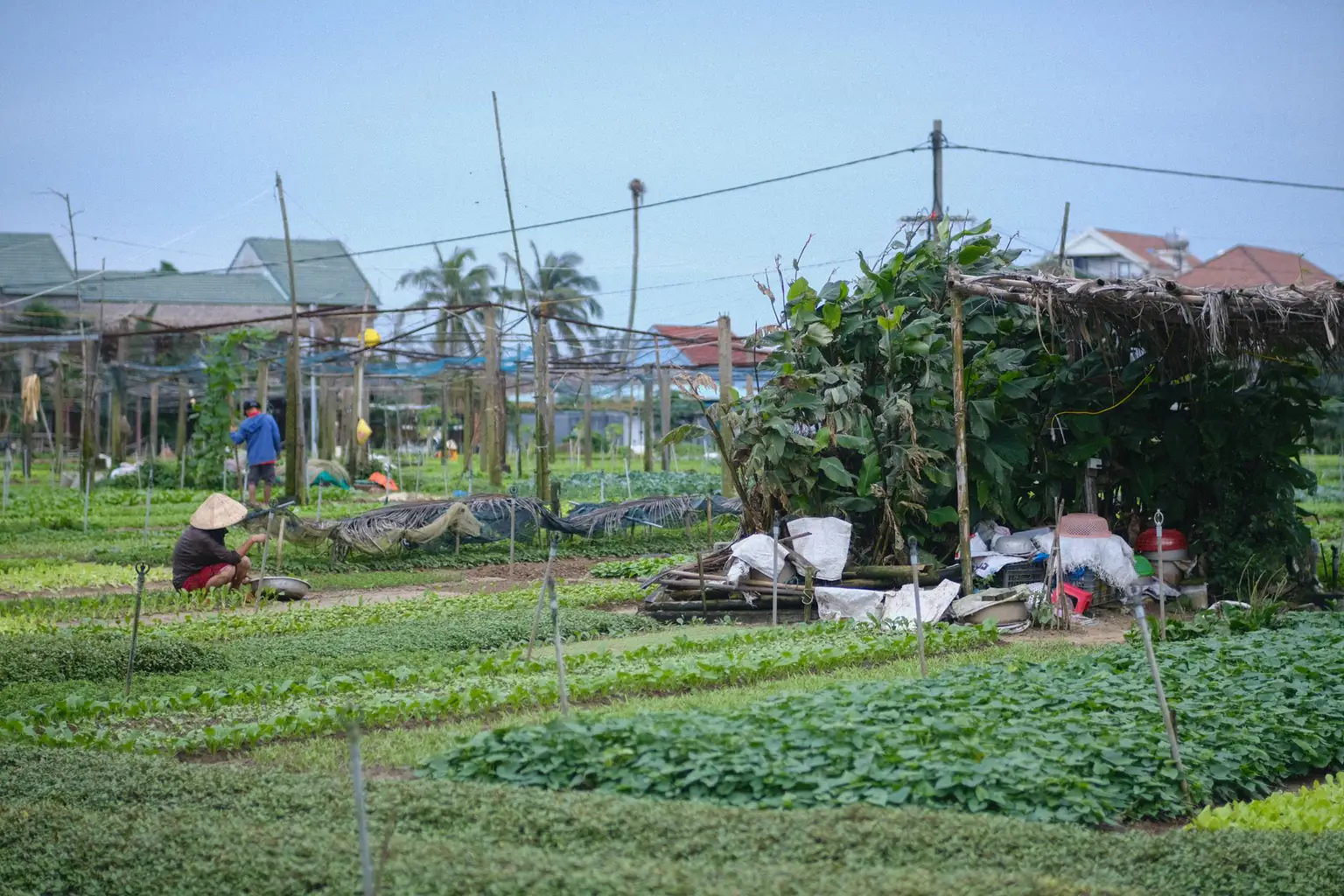
Table of Contents (4 sections)
Tra Que vegetable village nestles beside the Co Co River and the Tra Que lagoon, in Cam Ha commune, about 3 km northeast of the Hoi An Old Town. Settled since the 16th century, the village is known along the coast of Central Vietnam for its organic herbs, grown with natural weed gathered from the bottom of the lagoon. From the old town you can cycle, ride out on an electric scooter that Sun Travel delivers to your door, or book a private car if your group includes older relatives; go early in the morning or in the cool of the afternoon to work the garden alongside the farmers.
What makes Tra Que’s organic vegetable village unique
The Tra Que vegetable-growing craft has been recognised by the Ministry of Culture, Sports and Tourism as a national intangible cultural heritage. Its appeal comes from farming methods handed down over many generations:
- Natural farming with lagoon weed: Farmers do not use chemical fertilisers or growth stimulants. Instead, they gather fresh weed from the bottom of the Tra Que lagoon and the Co Co River, lay it under the sandy-loam beds, and water daily with clean groundwater. Sandy soil holds moisture well, and the organic humus from the weed gives the herbs their strong natural aroma and crisp sweetness.
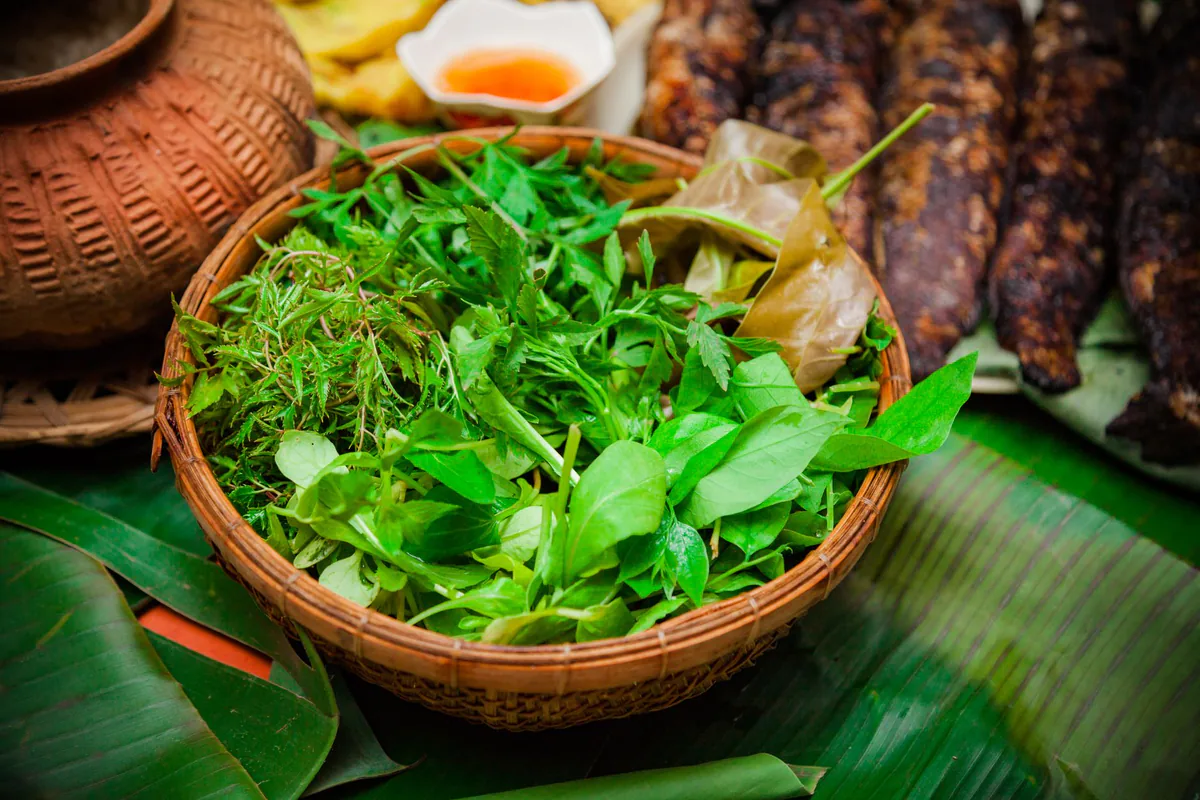
- More than 40 kinds of vegetables and herbs: The village intercrops many herbs that form the base of the region’s traditional dishes, including Vietnamese basil, Vietnamese mint, perilla, sawtooth herb (ngo gai), spring onion, chrysanthemum greens and bitter herbs. Tra Que leaves are small, thick and fragrant, and they are a must on the raw-herb plate served with mi Quang, cao lau, be thui Cau Mong and Hoi An banh xeo.
- An open, green landscape: The vegetable land covers dozens of hectares in neat, straight beds, with cool green tea hedges along the boundaries and clean tiled paths. The atmosphere is airy and quiet, well apart from the noise of the town.
Hands-on activities not to miss
Visiting Tra Que is more than admiring the view. You can also step into the role of a farmer:
1. Traditional farming experience
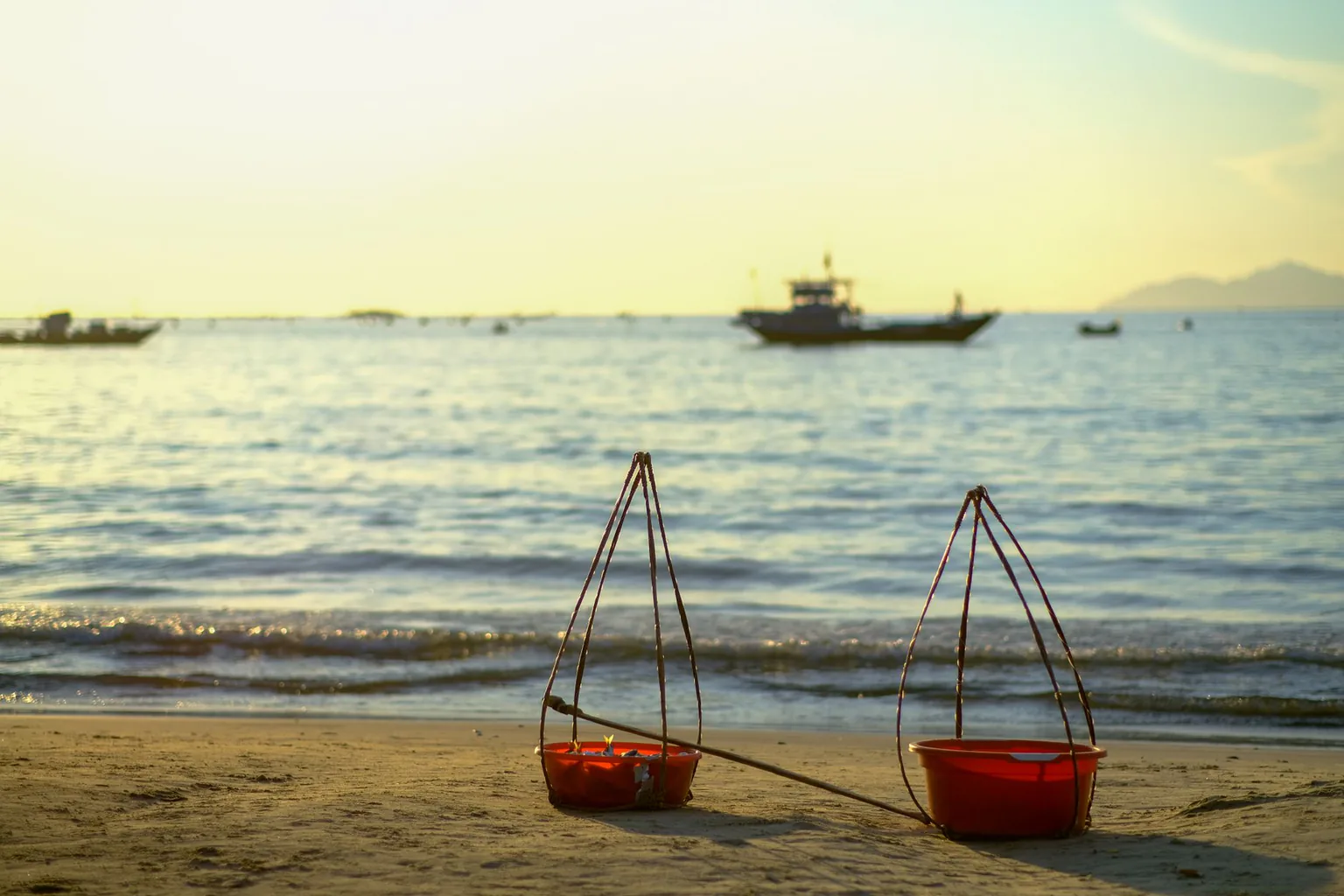
Local farmers help you put on brown peasant clothes and a conical hat, and then you hoe the soil, sow seeds and add weed to the beds. You will also try carrying a pair of wooden watering buckets on a shoulder pole, keeping your balance as you water each green herb evenly.
2. Cooking class
Several eco-gardens in the village run outdoor cooking classes. You walk through the garden with the cook, pick herbs straight from the beds, and then prepare traditional dishes such as:
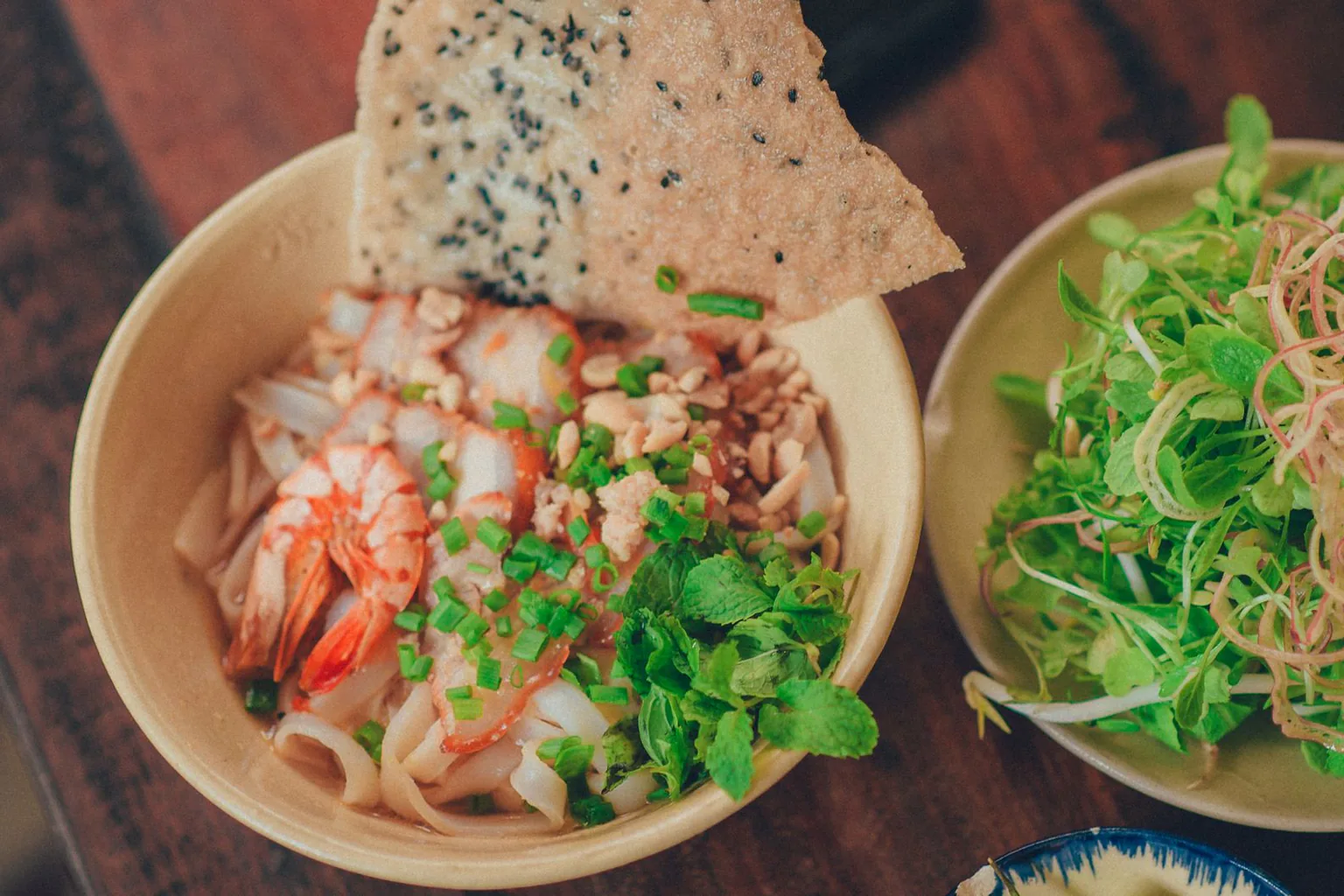
- Tam Huu: The signature dish of Tra Que, made from a boiled slice of pork belly and a fresh river prawn, rolled tightly with blanched spring-onion stalks and a sprig of Tra Que basil, and dipped in sweet-and-sour fish sauce with chilli and garlic.
- Crispy banh xeo: You pour your own golden banh xeo in a cast-iron pan, then roll it in rice paper with a plate of fresh Tra Que herbs picked in the garden.
3. Relaxing herbal foot soak
After a walk among the beds, you can book a herbal foot soak made from warm water brewed with lemongrass, lime, mint and mugwort leaves picked in the village. It is a gentle, relaxing way to finish the visit, and each garden sets its own price.
The best time of day to visit
Because the village is mostly open fields with little shade, the time of day matters a great deal:
- Early morning (6:30 – 8:30): The best time of the day. The early sun shines on the dew still resting on the herb leaves, and the air is cool and fresh. You can watch the farmers at their busiest, harvesting early to make the morning market.
- Cool late afternoon (15:30 – 17:30): Low sunlight slants across the fields, giving a calm, warm countryside scene. It suits a slow stroll, photos and an early dinner of simple local dishes.
- Avoid the midday slot (11:00 – 14:30): The midday sun over Central Vietnam is harsh, and heat radiating from sand and soil can cause heat exhaustion. The farmers also take their midday rest, so the activities slow down.
Getting there and ways to combine the visit
At only 3 km from the Old Town, and about 1.5 to 2 km from An Bang Beach, Tra Que fits easily into a half-day plan:
- Your own bicycle: The route from the Old Town to Tra Que along Hai Ba Trung street turns into a quiet village lane for part of the way, which suits visitors who like gentle cycling.
- Local tourist shuttle: Suitable for groups who want a relaxed ride around the nearby area in the cooler late afternoon.
- Chauffeured private car: The most comfortable and reassuring option for families with older adults or children. A private car picks you up at your hotel in Da Nang or Hoi An, takes you to Tra Que for the visit and the activities, then continues to An Bang Beach for a swim and seafood before returning. See the private car from Da Nang to Hoi An page and the Hoi An Old Town to An Bang Beach pickup guide.
- If you want to add an evening of local food, see the Hoi An food tour route guide.
Starting rates only. Sun Travel checks the pickup and drop-off points, itinerary and departure time before confirming the trip. Fuel, road tolls and parking are included in the listed route rate. Waiting at pickup is free for 30 minutes; waiting beyond 1 hour adds US$4. Extra stops need separate confirmation. Reference rate for a one-way chauffeured private car trip between Da Nang and Hoi An. The rate includes fuel, road tolls and parking fees on the standard route.
See the price list for private car trips for updated rates on sightseeing trips across Central Vietnam.
Frequently asked questions before visiting Tra Que Vegetable Village
How much is a private car to Tra Que Vegetable Village?
There is no separate listed fare for Tra Que Vegetable Village. The figures below are for the closest listed route, Da Nang → Hoi An: 4-seat car from US$11, 7-seat car from US$13 and 16-seat van from US$19 (including fuel, road tolls and parking). The fare for Tra Que Vegetable Village is quoted after checking your pickup and drop-off points, itinerary and departure time.
How far is Tra Que Vegetable Village from the Hoi An Old Town and An Bang Beach?
It is about 3 km from the centre of the Hoi An Old Town, to the northeast, and only about 1.5 to 2 km from An Bang Beach. By car or motorbike the trip takes roughly 5 to 7 minutes.
Do I need a ticket to enter Tra Que Vegetable Village?
Ask at the village gate about any entry charge and what it covers. Cooking classes, set meals and herbal foot soaks are priced separately by each garden.
What should I wear to the vegetable village?
Wear loose, comfortable clothes and shoes with good grip, or back-strap sandals that are easy to walk in on dirt paths. Bring a conical hat or wide-brimmed hat, sunglasses and sunscreen. If you join the farming activities, the gardens usually provide boots and brown peasant clothes for visitors.
How much time should I set aside for Tra Que?
For a stroll and photos, about 45 minutes to 1 hour is enough. For the full farming experience, a cooking class and a meal or foot soak on site, plan roughly 2.5 to 3.5 hours.
📚 More Travel Guides