Visiting Thanh Ha Pottery Village in Hoi An
The village dates from the early 16th century; the terracotta park inside it offers a pottery experience, while ticket prices and hours must be checked at the gate.

Table of Contents (5 sections)
Thanh Ha pottery village sits quietly on the Thu Bon River, about 3 km west of Hoi An Ancient Town. For more than five centuries since the early 16th century, the village has kept its traditional unglazed terracotta technique, which gives the pottery a warm reddish-brown colour. Sitting at a wooden potter’s wheel, shaping soft clay with your own hands, and making a clay whistle figurine (to he) makes a memorable cultural experience on a trip to Quang Nam.
The village space and the old kilns by the Thu Bon River
The village stretches along the north bank of the Thu Bon River, where boats have carried clay from the upstream sandbanks for hundreds of years. Walking in, you see small lanes paved with deep red brick, shaded by bougainvillea trellises, and unglazed pottery drying in the sun in front of every house.
The village has two main areas side by side:
- Traditional craft hamlet: Home to dozens of family kilns run by veteran craftspeople. Here the clay is kneaded by foot, the pieces are shaped on hand-turned wheels, and they are fired with dry wood in traditional bau and coc kilns. Thanh Ha pottery mainly serves everyday life: clay cooking pots, medicine pots, water jars, flower pots, and terracotta roof tiles and bricks.
- Terra Cotta Park: A contemporary art building of nearly 6,000 square metres, designed to look like a potter’s wheel and two upturned old kilns. Inside, you find a museum of old pottery, contemporary sculptures and a model area with small terracotta replicas of world landmarks such as the Taj Mahal, the Sydney Opera House, the Leaning Tower of Pisa and the Egyptian pyramids.
Trying the wheel and shaping a to he with a craftsperson
The highlight of Thanh Ha is trying pottery yourself under the guidance of local craftspeople. Craftwork here needs coordinated hands and feet:
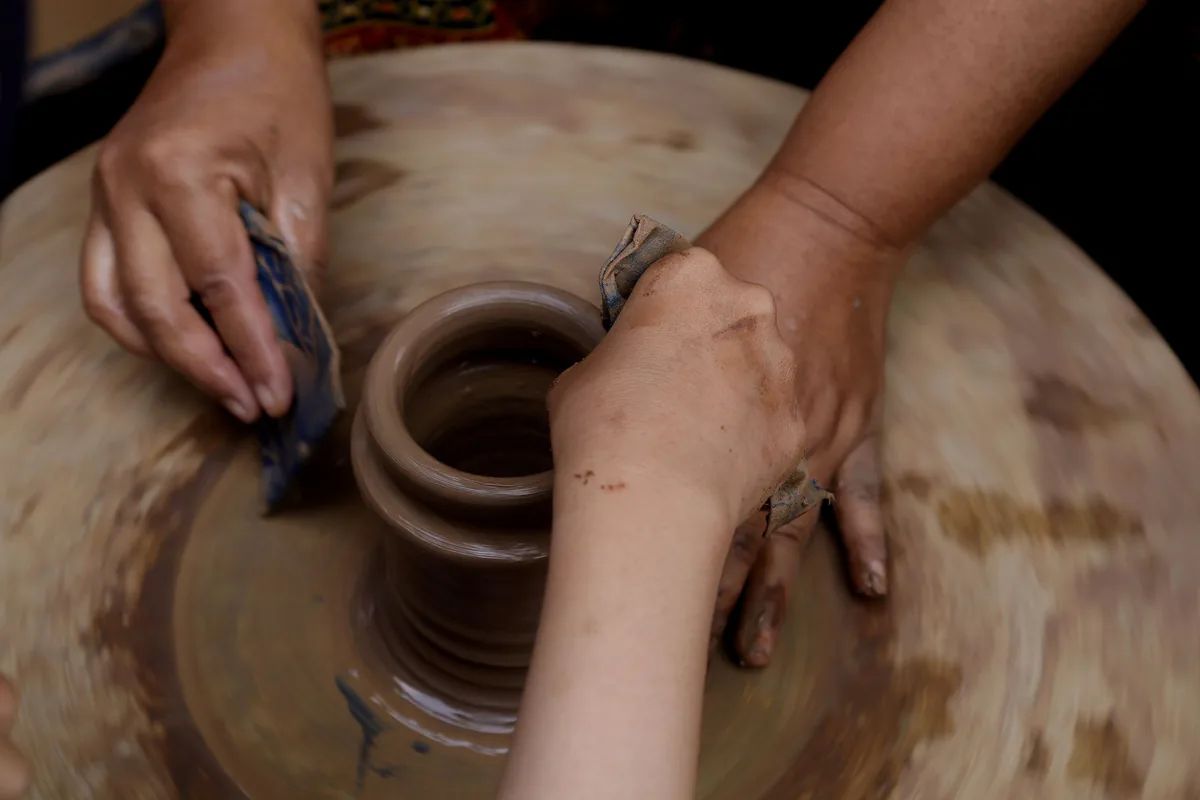
- Working the hand-turned wheel: Unlike a modern electric wheel, the Thanh Ha wheel is made of heavy jackfruit or kien kien wood and runs purely on mechanical force. The craftsperson sits opposite and pushes the rim with a foot to keep the wheel turning, while your hands rest lightly on the clay to centre it. You can ask a friend to work the foot and keep the rhythm, so you can focus on shaping.
- Centring and pulling the clay: Once well kneaded, Thanh Ha clay holds together very firmly. When the wheel starts to turn, use both palms to bring the clay into the centre, then press your thumb gently into the middle to make a hollow. Raising the walls from the base upwards, the clay quickly takes shape as a small bowl, a small dish or the mouth of a vase.
- Shaping a to he: A wheel needs round, even forms, while a to he lets you create free shapes. The craftsperson shows you how to roll small pieces of clay, shape the ears, eyes and horns of the twelve zodiac animals, and use a bamboo stick to hollow out a chamber at the tail, which acts as an air vent. Once the clay is dry and fired, the to he whistles clearly when you blow into it.
Drying your piece and packing it for the trip home
Many visitors want to take their own piece home. Raw clay needs careful handling:
- Understanding unfired pottery: The bowl or vase you have just shaped is unfired and still holds a lot of moisture. The village’s wood kilns are fired only when enough pieces from the whole hamlet are ready, and a firing cycle takes about 2 to 3 days. You cannot wait for your piece to be fired during the visit.
- Drying the surface: The craftsperson sets your piece on a bamboo tray to dry in the breeze for about 30 to 45 minutes, so the clay loses water and the surface firms up. Do not leave it in direct midday sun, because the sudden shrinkage of the clay can crack the body.
- Padding against knocks: Dried unfired pottery is brittle and breaks easily under pressure. For a safe trip to the hotel, ask the craftsperson for a stiff cardboard box and pack soft foam or newspaper around the base and the rim. In the car, place the box flat on a seat, not under heavy suitcases in the boot.
Souvenirs: terracotta figurines and handmade craft
Besides trying the craft yourself, browsing the workshop stalls offers the chance to buy simple, durable keepsakes:
- Terracotta to he set of the 12 zodiac animals: The most distinctive keepsake from Thanh Ha. Each to he shapes a buffalo, tiger, horse or dragon with playful carving, a natural brick-red colour and a cheerful whistle. They make good gifts for friends and children.
- Household pottery and tea sets: Workshops display clay tea sets that keep the tea warm, sturdy clay pots for braising fish, dishes for scented candles and clay piggy banks. The unglazed, wood-fired pottery is used for everyday cooking.
- Decorative tiles and reliefs: The Terra Cotta Park area has small terracotta reliefs and red clay panels with fine carvings of Hoi An’s old-town scenes, suited to a living-room display.
Choosing transport and the best time to visit
For the most comfortable visit, plan the vehicle and the time together:
- Best times: Mornings from 8:00 to 10:30, or afternoons from 14:30 to 17:00, when the air by the Thu Bon River is at its coolest. You avoid the hot midday sun, can wander under the trees and watch the craftspeople work in front of their houses.
- From Hoi An Ancient Town: The route from the centre of Hoi An to the village is about 3 km, straight along Duy Tan or Hung Vuong road. You can cycle along the river in about 15 minutes, or take a local electric shuttle in about 7 minutes.
- From Da Nang by private car: The distance from central Da Nang or the airport to Thanh Ha village is about 30 to 32 km, and the drive takes about 40 to 45 minutes. Many visitors book a private car from Da Nang with a pickup at the door, spend 1.5 to 2 hours at the village, and then ask the car to take them on to their hotel in the old town.
Starting rates only. Sun Travel checks the pickup and drop-off points, itinerary and departure time before confirming the trip. Fuel, road tolls and parking are included in the listed route rate. Waiting at pickup is free for 30 minutes; waiting beyond 1 hour adds US$4. Extra stops need separate confirmation. This is the rate for the private car route from Da Nang to the Hoi An area. It includes fuel, road and BOT tolls and parking fees. You can ask the driver to stop at Thanh Ha pottery village on the way; the extra stop is confirmed for your trip.
When planning a trip that links nearby places, see the Hoi An traditional craft villages car tour itinerary or compare fares in the rate table.
Frequently asked questions about visiting Thanh Ha pottery village in Hoi An
How much is a private car to Thanh Ha Pottery Village?
There is no separate listed fare for Thanh Ha Pottery Village. The figures below are for the closest listed route, Da Nang → Hoi An: 4-seat car from US$11, 7-seat car from US$13 and 16-seat van from US$19 (including fuel, road tolls and parking). The fare for Thanh Ha Pottery Village is quoted after checking your pickup and drop-off points, itinerary and departure time.
How far is Thanh Ha pottery village from Hoi An Ancient Town?
The village is about 3 km west of the old town, right on the Thu Bon River. By car or electric shuttle, it takes about 7 to 10 minutes.
What does a visit to Thanh Ha pottery village include?
The visit covers walking through the family kilns, watching the craftspeople work and trying the wheel and to he shaping yourself. Entry and activity fees are set by the village and the workshops, so confirm them on site before you go.
Can I take home a piece I shaped the same day?
Pieces you shape can be taken home only after they have dried in the air, unfired, as a keepsake. The wood kilns are fired only when enough pieces are ready, and a firing takes about 2 to 3 days.
What should I wear for a pottery session?
Wear neat clothes in dark colours, which hide clay stains when they are wet, and bring sandals with a strap or shoes that are easy to wash.
How long is a good stop at the pottery village?
About 1.5 to 2 hours is enough to walk through the lanes, shape a piece of pottery and visit the Terra Cotta Park next door.
📚 More Travel Guides