How to Choose Royal Tombs and Thien Mu Pagoda for a One-Day Hue Tour
Select between Tu Duc, Khai Dinh, and Minh Mang tombs alongside Thien Mu Pagoda for a 1-day Hue tour: realistic visiting durations and private car routes.
Table of Contents (5 sections)
The Nguyen Dynasty royal tombs in Hue are scattered across the southwestern hills, each reflecting distinct architectural styles and landscape philosophies. Given the limited hours of a day trip from Da Nang or Hoi An, visiting at most two tombs combined with Thien Mu Pagoda by the Perfume River is ideal. Selecting sites that match your architectural taste and walking capacity ensures an unhurried, enriching cultural excursion.
Why you should not attempt all tombs in a single day
The Nguyen Dynasty left seven major royal tomb complexes situated 5 to 12 km from central Hue. When driving from Da Nang or Hoi An, you spend roughly 4 to 5 hours on round-trip road transit alone, leaving about 5 to 6 hours for on-site sightseeing.
- Thoroughly exploring a tomb complex takes 45 to 75 minutes, excluding local transit between sites and lunch breaks.
- Rushing through three or four complexes causes physical exhaustion under Central Vietnam’s hot sun or seasonal rains, diluting appreciation of their unique heritage.
- The recommended approach combines one or at most two standout tombs with Thien Mu Pagoda along the Perfume River.
Architectural highlights of three representative royal tombs
1. Khai Dinh Tomb (Ung Lang) — Elaborate glass and porcelain mosaics
- Setting and terrain: Built on the slopes of Chau Chu Mountain, about 10 km from downtown Hue.
- Architecture: A remarkable fusion of Western European classical influences and traditional Vietnamese imperial design. Its highlight is the Khai Thanh Palace, covered in intricate colored glass and ceramic mosaics with the famous “Nine Dragons in the Clouds” ceiling fresco.
- Walking considerations: Built on steep terraced hillsides requiring a climb of 127 stone steps. Elderly visitors or those with knee sensitivity should ascend at a gentle pace.
2. Tu Duc Tomb (Khiem Lang) — Poetic garden retreat and pavilions
- Setting and terrain: Nestled in a gentle valley in Duong Xuan Thuong village, approximately 8 km from central Hue.
- Architecture: Exudes a tranquil, romantic atmosphere with Luu Khiem Lake, water pavilions for tea ceremonies, pine woodlands, and frangipani courtyards. Built during the monarch’s lifetime, it resembles a royal country park.
- Walking considerations: Gentle undulating stone paths shaded by mature trees make this complex comfortable for leisurely walking with seniors and small children.
3. Minh Mang Tomb (Hieu Lang) — Symmetrical grandeur amidst nature
- Setting and terrain: Located on Cam Ke Hill near the confluence of the Perfume River’s two branches, 12 km from the city.
- Architecture: Laid out along an impressive 700-meter straight central axis (the Sacred Path) comprising nearly 40 palatial structures surrounded by lotus ponds and pine hills, embodying classical Confucian harmony.
- Walking considerations: The grounds are expansive, requiring significant walking to explore the full ceremonial axis.
Thien Mu Pagoda: Serene riverside sanctuary
Perched atop Ha Khe Hill overlooking the Perfume River 5 km west of Hue, Thien Mu Pagoda is Hue’s most revered spiritual landmark, famous for its seven-tiered Phuoc Duyen Tower.
- Admission is free, making it an effortless cultural stop in the early afternoon or at sunset.
- The pagoda courtyard is just a few stone steps up from the vehicle parking area, shaded by ancient pines.
Suggested day-trip schedule from Da Nang or Hoi An
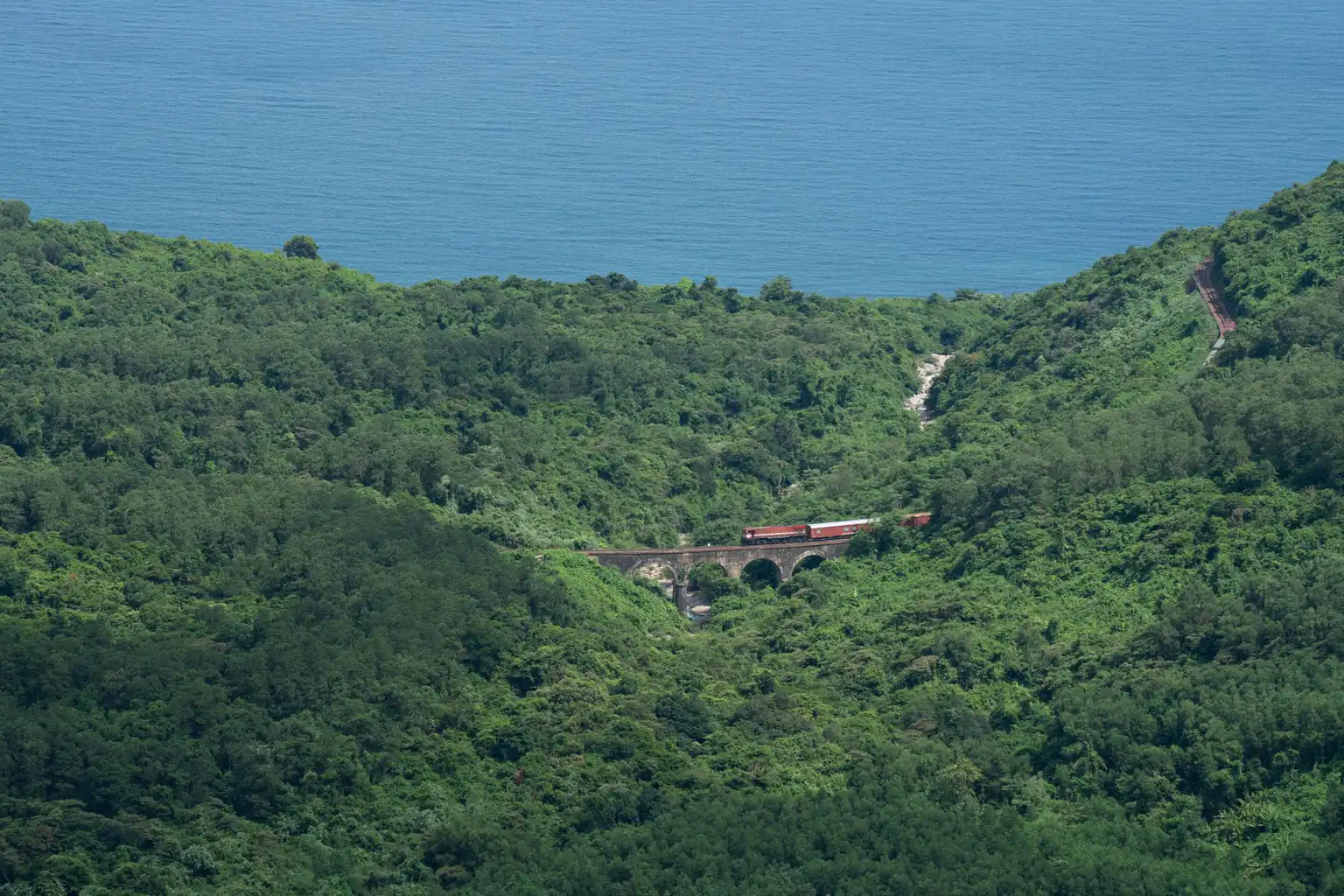
- Morning: Depart Da Nang (around 7:30 AM) or Hoi An (around 7:00 AM). Travel across Hai Van Pass or through the tunnel, arriving in Hue by 10:00 AM. Tour your first tomb (Khai Dinh or Tu Duc).
- Midday: Enjoy local Hue culinary specialties in the city centre and take an hour to rest.
- Afternoon: Visit Thien Mu Pagoda (1:30 PM - 2:30 PM), then explore your second chosen tomb before beginning the return journey south at 3:30 PM.
Learn about our full-day itinerary at the Da Nang, Hai Van Pass, Lang Co and Hue day car tour or view rates on the private car to Hue page.
Dress code, visiting tips, and entrance tickets
- Attire: Royal tombs and Thien Mu Pagoda are sacred cultural sites requiring modest clothing (shoulders covered, trousers or skirts extending below the knees).
- Tickets: Entrance fees are set by the Hue Monuments Conservation Centre and sold at each monument’s ticket booth (combo tickets are available for multiple sites).
Frequently asked questions about touring Hue royal tombs in one day
Which royal tomb is best suited for seniors or visitors with walking difficulties?
Tu Duc Tomb is the best option because its layout is gentle and shaded, with flat paved walkways and fewer steep staircases compared to Khai Dinh Tomb's 127 steps.
How long should you spend at each royal tomb complex?
A comfortable visit takes 45 to 75 minutes per complex. If touring with an official guide or taking extensive photography, budget approximately 1.5 hours.
Is there an entrance fee for Thien Mu Pagoda?
No. Thien Mu Pagoda is an active Buddhist monastery and welcomes pilgrims and travelers without any admission fee.
Does the private tour from Da Nang drop visitors at each tomb entrance?
Sun Travel private vehicles take your group to the parking area of each monument and wait for your return. The exact parking position at each site is confirmed trip by trip.
Do ticket-sale hours for the Hue monuments differ between summer and winter?
Yes. According to hueworldheritage.org.vn, tickets are sold from 6:30 AM to 5:30 PM in summer (16 March to 15 October) and from 7:00 AM to 5:00 PM in winter (16 October to 15 March). The page was posted on 12 March 2024, so check the current notice before you travel.
📚 More Travel Guides