Getting Around Hoi An: When to Walk, Cycle or Book a Chauffeured Private Car
Hoi An Ancient Town is compact enough to explore on foot during pedestrian hours, while 3 to 6 km rides to craft villages and beaches suit bicycles in cool weather or a private car with luggage.
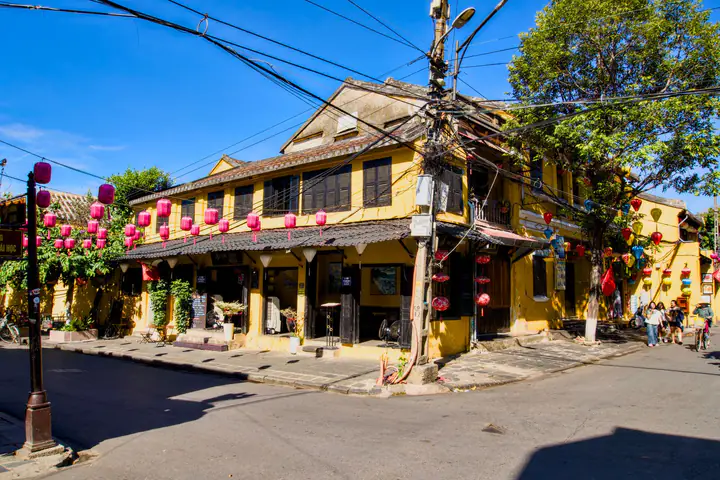
Table of Contents (7 sections)
- Quick Choice by Leg
- Inside the Ancient Town Core: Walking by Default
- Bicycles, Cyclos, Boats, and Electric Shuttles for Short Hops
- Reaching Outlying Villages and Beaches: Bicycle for One Stop, Private Car for Combinations
- Midday Heat, Heavy Rain, and High Water: Adjust How You Move
- Old-Town Hotels and 16-Seater Vans: Confirm Pickup Points Ahead
- Returning to Da Nang and the Airport: Bus LK02 vs Private Car
Hoi An’s heritage core is compact enough to explore on foot, and cars and motorbikes are restricted from entering the central lanes during designated pedestrian hours. Bicycles work well for short rides; cyclos and wooden boats on the Hoai River are meant for sightseeing rather than point-to-point transport. For outlying stops starting around 3 km from the old town—such as Tra Que vegetable village, Thanh Ha pottery village, Cam Thanh coconut forest, or An Bang Beach—your choice depends more on heat, rain, luggage, and who is traveling with you than on distance alone: a light-traveling group on a cool morning can cycle comfortably, while families with young children, older relatives, or multiple stops in one half-day find a private car much easier.
Quick Choice by Leg
| Leg | Distance | Usual fit | When to switch to a private car |
|---|---|---|---|
| Between sights inside the Ancient Town core | Core zone approx. 30 ha | Walking | Slow walkers, bulky strollers, heavy downpours, or rising river levels |
| Tra Que vegetable village, Thanh Ha pottery village | Tra Que approx. 3 km; Thanh Ha approx. 3 to 3.5 km | Bicycle in cool weather | Combining both stops in one session, carrying fragile pottery, or midday heat |
| Cam Thanh coconut forest | Approx. 6 km, about 15 minutes by car | Bicycle early morning or late afternoon | Traveling as a family group or pairing with the Ancient Town in the same block |
| An Bang and Cua Dai beaches | Approx. 4 to 7 km; An Bang is about 10 minutes by car or 25 to 35 minutes by bike | Bicycle for a light stroll | Carrying beach gear, staying until after dark, or traveling with young kids |
| Marble Mountains, My Son Sanctuary, Ba Na Hills | Approx. 20 km, 40 km, and 55 km | Not practical by bicycle | Almost always requires a car |
| Da Nang Airport and central Da Nang | Approx. 30 km, 40 to 45 minutes by car | Bus LK02 with light bags and flexible timing | Suitcases, fixed flight or train times, or a group traveling together |
Inside the Ancient Town Core: Walking by Default
The central market, assembly halls, Japanese Covered Bridge, and Hoai River quays sit close together inside the heritage core and connect easily on foot. Remember that heritage admission is charged per monument entered ( Vietnamese dong per person per site from August 10, 2026); see Hoi An old town ticket: which sites to choose to plan which interiors to visit.
Whether a vehicle can enter depends on the time of day. Hoi An reserves core streets for pedestrians and non-motorized traffic during specific hours, which adjust between summer, winter, and festival dates. Ask your hotel front desk for the exact hours in effect on your travel date, or check the street-entry signs before setting a vehicle pickup time.
For private car passengers, this means your driver meets you at a perimeter point outside the barriers and you walk the final stretch. Evening streets are busier than daytime hours; see where to catch your private car in Hoi An at night for practical meeting spots.
Bicycles, Cyclos, Boats, and Electric Shuttles for Short Hops
Bicycles are non-motorized and can usually enter many streets outside peak pedestrian crowds; dismount and walk your bike whenever you see restriction signs or dense foot traffic. Many hotels and homestays lend or rent bicycles—check lock rules and parking spots with reception before heading out. Beyond the old town, roads toward the beach and craft villages carry regular motor traffic, so riding early in the morning or late in the afternoon is much more pleasant than midday.
Cyclos and wooden rowboats on the Hoai River offer short sightseeing loops operated by local residents rather than point-to-point transit. Confirm the price, route, and duration before boarding, and avoid river boats when water levels rise during heavy rain.
Licensed four-wheel electric tourist shuttles run along approved corridors, mainly linking perimeter parking lots (such as Ly Thuong Kiet) with Song Hoai Square. They can bridge the last stretch when your private car parks at a perimeter lot; check the operator’s posted fare before boarding.
Reaching Outlying Villages and Beaches: Bicycle for One Stop, Private Car for Combinations
Cycling to a single nearby village on a cool morning is straightforward. The challenge begins when you combine stops: each extra stop adds another stretch under the sun, another place to park and watch your bike, and another ride back. Four practical reasons travelers switch to a private car for outlying stops:
- Carry-on items: wet swimsuits, Thanh Ha ceramics, or folding lanterns are awkward to balance on a bicycle basket.
- Evening return from the beach: late afternoon is when many visitors leave An Bang Beach at once, making on-demand taxis harder to hail, whereas a pre-arranged car waits at the parking area.
- Travel companions: young children and seniors tire quickly in midday heat; an air-conditioned cabin gives them a cool break between stops.
- Time at each venue: your driver waits at the venue parking lot and brings you back at the agreed time; waiting terms are shown clearly on each route page.
For stop-specific preparation, read our guides on preparing for a visit to Tra Que vegetable village and getting from Hoi An old town to An Bang Beach. Starting rates by vehicle size for short hops around Hoi An and transfers to Da Nang are listed on private car routes from Hoi An and in our private car pricing table.
Midday Heat, Heavy Rain, and High Water: Adjust How You Move
Between June and August, midday temperatures make walking and cycling exhausting. Split your day in two, keeping midday hours for lunch and indoor rest.
During light rain, a thin raincoat and a shorter walking loop still work. During heavy downpours or rising river water, skip cycling and riverside boats, switch to higher-ground indoor stops, and use a car for longer legs; see our guide on Central Vietnam storm season and schedule management.
Old-Town Hotels and 16-Seater Vans: Confirm Pickup Points Ahead
When sending a booking request, share your hotel name, map pin, passenger count, suitcase count, and preferred pickup time. Your driver will coordinate the nearest legal stopping point outside the restricted zone and send the vehicle color and license plate.
A 16-seater van must stop at outer perimeter lots farther from the core than 4- or 7-seater cars, so factor the group’s walking time with luggage into your departure schedule. Families traveling with strollers and suitcases can check choosing a 4-, 7- or 16-seat car with kids and a stroller.
Returning to Da Nang and the Airport: Bus LK02 vs Private Car
Hoi An sits roughly 30 km (40 to 45 minutes by car) from Da Nang International Airport and downtown Da Nang. Interprovincial bus line LK02 runs roughly from 05:45 to 18:00 every 15 to 30 minutes, linking the Cua Dai inland waterway parking area with Vietnam–Korea University in southern Da Nang via the Hoi An bus station. Because LK02 does not serve downtown Da Nang hotels or the airport terminals directly, you will need a taxi or ride-hail connection at one or both ends.
If you have suitcases, a fixed flight or train departure, or a family group traveling together, a private car from Da Nang to Hoi An (or the reverse Hoi An to Da Nang route) picks you up at your agreed meeting point and drives straight to your destination.
Frequently asked questions about getting around Hoi An
What are the starting private car rates for getting around Hoi An?
For getting around Hoi An, the reference route Hoi An → central Da Nang / My Khe Beach starts from US$11 for a 4-seat car, US$13 for a 7-seat car, and US$19 for a 16-seat van (including fuel, road tolls and parking on the standard route). Sun Travel quotes the final fare based on your pickup and drop-off points, itinerary and departure time.
Should we bring suitcases or a large stroller when walking inside Hoi An Ancient Town?
Avoid pulling suitcases through the Ancient Town, and bring only a compact folding stroller if needed. Many historic houses have raised wooden thresholds and uneven stone paving. On check-in or check-out days, leave suitcases at hotel reception or inside your private car trunk with your driver.
Where should we meet our private car if our hotel is inside the pedestrian zone?
Meet at a perimeter point just outside the restricted streets, such as the Song Hoai Square lot or Ly Thuong Kiet parking area. Share your hotel name, map pin, and pickup time when booking so the driver can confirm the exact spot for that time window.
Should we cancel cycling plans if the weather turns very hot or rainy?
In hot summer weather, move cycling to early morning (before 08:30) or late afternoon (after 16:00) and rest indoors at midday. During heavy rain or rising river water, skip cycling and river boats and switch to a private car from a high-ground pickup point.
What happens if our hotel street is closed to cars when the driver arrives?
The driver stops at the nearest legal pickup point outside the barrier and sends you the exact location, vehicle color, and license plate. For 16-seater vans, perimeter stops sit slightly farther out, so confirm the meeting point and walking buffer a day in advance.
📚 More Travel Guides