Visiting the Traditional Craft Villages of Hue: A Route Through Thuy Xuan Incense, Thanh Tien Paper Flowers and Sinh Village Prints
How to plan visits to the Thuy Xuan incense village near Vong Canh Hill and the cluster of Thanh Tien paper flowers and Sinh woodblock prints downstream on the Perfume River.
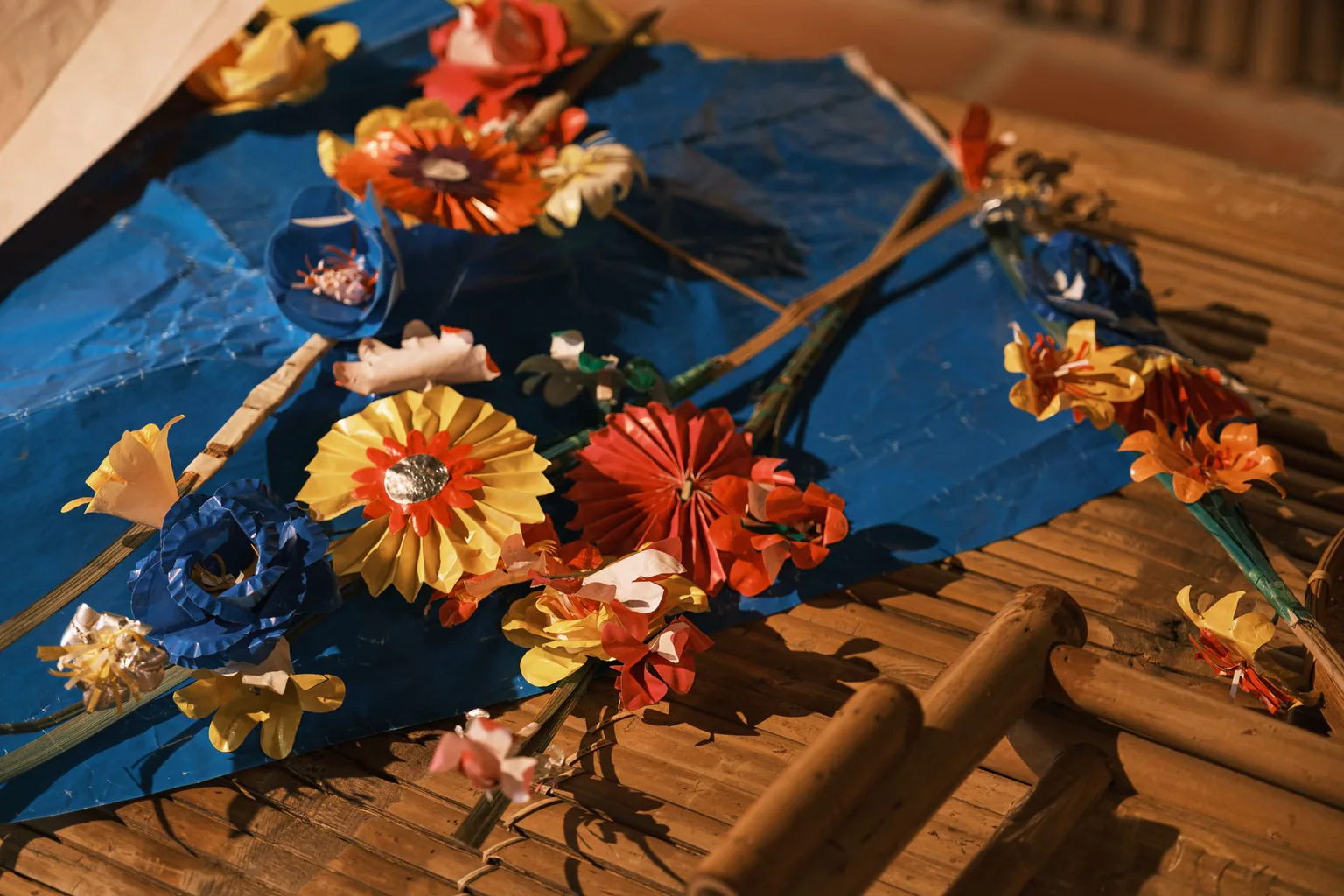
Table of Contents (4 sections)
The traditional handicraft villages of Hue fall into two clear geographic clusters. The south-west cluster runs along Huyen Tran Cong Chua Street, with the Thuy Xuan incense village close to Tu Duc Tomb and Vong Canh Hill. The north-east cluster lies downstream on the Perfume River, with the Thanh Tien paper flower village and the Sinh folk print village. Knowing where each cluster lies lets you fit a craft experience into the morning before you set off in a private car for Hoi An, without doubling back.
The south-west cluster: Thuy Xuan incense village on Huyen Tran Cong Chua Street
About 7 km south-west of the centre of the south bank of the Perfume River, the Thuy Xuan incense-making village sits right on the frontage of Huyen Tran Cong Chua Street, the main road linking Tu Duc Tomb and Vong Canh Hill. It is the easiest craft village to reach for a family group, thanks to the wide asphalt road and the display spaces that sit side by side:
- Rolling incense and learning about the agarwood and cinnamon ingredients: The long-established households in Thuy Xuan use agarwood powder, cinnamon twigs, black cardamom, clove and star anise mixed with a glue made from the bark of the boi loi tree to give a gentle scent that does not sting the eyes. Visitors can sit and try rolling incense sticks by hand under the guidance of the artisans at the stalls.
- A setting for photos with multicoloured incense stems: Bundles of incense stems dyed red, yellow, purple and green are fanned out in circles to dry in the sun along both sides of Huyen Tran Cong Chua Street, creating a very characteristic backdrop for photos in a traditional ao dai.
- Where cars can park: Along the row of Thuy Xuan incense stalls and opposite the gate of Tu Duc Tomb there are roadside verges and a wide car park, so cars of 4, 7 and 16 seats can stop and wait close to the sights without your group having to walk far.
The downstream cluster: Thanh Tien paper flowers and Sinh folk prints
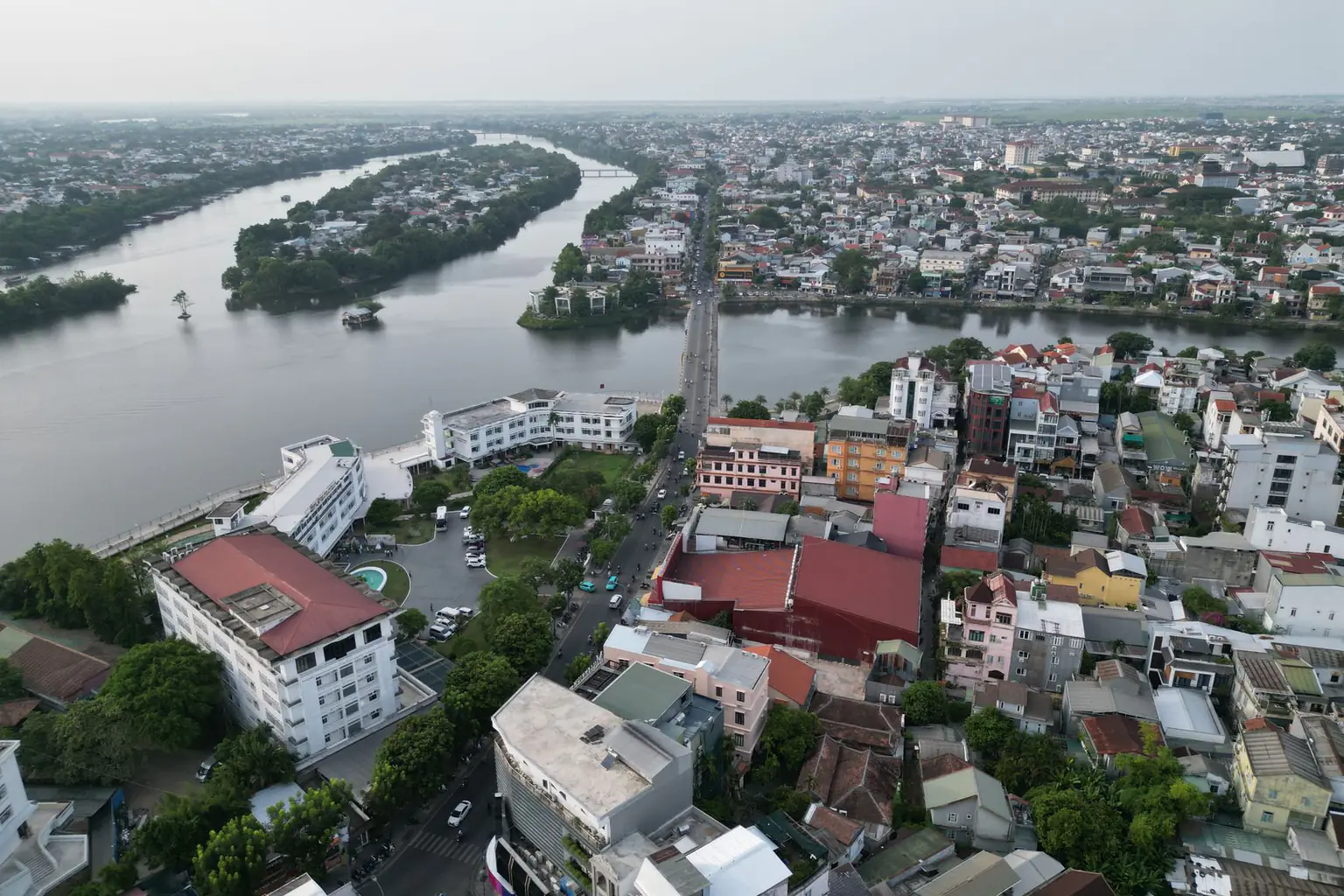
In the opposite direction from Thuy Xuan, the Thanh Tien paper flower village and the Sinh woodblock print village lie close together on the south bank of the lower Perfume River (in the Phu Mau area), about 9 to 10 km north-east of Truong Tien Bridge along the Pham Van Dong – Provincial Road 10 axis:
| Craft village | Technique and products | What visitors actually do |
|---|---|---|
| Thanh Tien paper flower village | Making traditional paper flowers for worship (the five-colour blossoms) and elegant paper lotus flowers from split bamboo and paper dyed with plant extracts. | Visit the artisans’ homes, fold the paper lotus petals yourself, form the leaf veins and assemble a finished lotus branch to take home as a souvenir. |
| Sinh folk print village (Lai An) | About 1.5 km from Thanh Tien along the Perfume River dyke; known for woodblock prints on do paper brushed with ground shell powder (diep) and coloured with natural pigments. | Roll ink onto an old carved woodblock yourself (prints such as Ba Do, To Nu, the Wrestlers and the Twelve Zodiac Animals), print it on diep paper and add colour with a pine-needle brush. |
Because these two villages lie in the calm space of a village lane beside the river rather than in a busy commercial row of stalls like Thuy Xuan, set aside about 90 to 120 minutes to talk with the artisans and to learn more through the overview of traditional craft villages in Hue.
Tips for protecting handicrafts in the boot on a long drive
The handicrafts bought in Hue’s craft villages, such as the Thanh Tien paper lotus branches, the non bai tho (poem hats), the boxes of Thuy Xuan incense cones and the rolled Sinh prints on do paper, are all slender and easily deformed if packed against hard suitcases. When you travel in a privately contracted car, three packing methods will keep the gifts in shape all the way over the pass or through the Hai Van tunnel:
- Pack the Sinh prints and the paper lotus in a stiff tube: The artisan workshops at Thanh Tien and Sinh village usually keep cardboard tubes or long cartons ready for customers who buy to carry far. Choose lotus branches with flexible rattan stems so they can be bent neatly into the box without breaking the petals.
- Keep a separate layer of luggage in the boot of a 4-, 7- or 16-seat car: Ask the driver to load the heavy suitcases on the bottom layer of the boot, then to place the boxes of paper flowers, the conical hats and the bags of incense on the upper shelf or on empty seats in the air-conditioned passenger cabin.
- Wrap the incense and incense-cone boxes tightly: Thuy Xuan incense made from natural herb powders is very sensitive to damp, so ask the stall owner for an extra zip bag or sealed plastic wrap around the paper box if you are travelling on a rainy day.
Fitting a craft village visit in before you leave for Hoi An
If on your last day in Hue you check out of the hotel in the morning and plan to check into the old town of Hoi An in the afternoon, you can take advantage of the door-to-door service of the private car from Hue to Hoi An, or arrange the visit the day before within the one-day Hue city tour, in one of two options that follow the road:
- Option 1: Thuy Xuan incense village (for groups with 90 minutes in the morning). Check out at 08:00, load all the luggage into the private car and go up Huyen Tran Cong Chua Street to photograph the Thuy Xuan incense village and look at the Perfume River from Vong Canh Hill until 09:45. The car then follows the Hue bypass or Nam Cao Street straight onto National Highway 1A towards Hoi An.
- Option 2: Thanh Tien and Sinh village (for groups who love handicrafts). Leave at 08:00 for the lower Perfume River to make a paper lotus at Thanh Tien and print at Sinh village until 10:30, have an early lunch in Hue, then follow the Hai Van tunnel route straight to your Hoi An hotel in the early afternoon.
Frequently asked questions about visiting the traditional craft villages of Hue
What are the starting private car rates for Hue traditional craft villages thuy xuan thanh tien?
For Hue traditional craft villages thuy xuan thanh tien, the reference route Full-day tour: Hue City Tour (8:00–17:00) starts from US$55 for a 4-seat car, US$63 for a 7-seat car, and US$87 for a 16-seat van (including fuel, road tolls and parking on the standard route). Sun Travel quotes the final fare based on your pickup and drop-off points, itinerary and departure time.
If we only have about 2 hours in the morning before leaving Hue for Hoi An, which craft village should we choose?
The Thuy Xuan incense village on Huyen Tran Cong Chua Street is the most convenient choice. It is only 7 km from the centre of the south bank, the road is wide enough for cars to park beside the multicoloured incense stalls and you can add Tu Duc Tomb or Vong Canh Hill right next door.
When in the year are the Thanh Tien paper flower village and the Sinh print village liveliest?
These two craft villages on the lower Perfume River are busiest in the twelfth lunar month, when families rush to make five-colour paper flowers and worship prints for Tet. In the other months the larger artisan households still open their doors to visitors who want to dye petals and print woodblocks themselves.
Are Thuy Xuan incense or Thanh Tien paper flowers likely to break when we carry them in the car to Hoi An?
The workshops at Thuy Xuan and Thanh Tien usually have stiff paper tubes or cartons packed for customers travelling far. You can ask the driver of the private car to place these handicraft boxes on the top layer of the boot so the suitcases do not press on them.
Is there an entrance ticket for trying incense rolling at Thuy Xuan or paper flower making at Thanh Tien?
The Thuy Xuan incense village and the artisan houses at Thanh Tien and Sinh village may not charge an entrance ticket, so ask at the village first. Costs usually arise only when you buy handicrafts as gifts or register for a lesson in which an artisan guides you one-to-one.
📚 More Travel Guides