Hon Chen Temple Festival: Mother Goddess Worship on Perfume River
Witness one of Central Vietnam most vibrant spiritual spectacles: hundreds of decorated dragon boats cruising up the Perfume River for temple ceremonies.
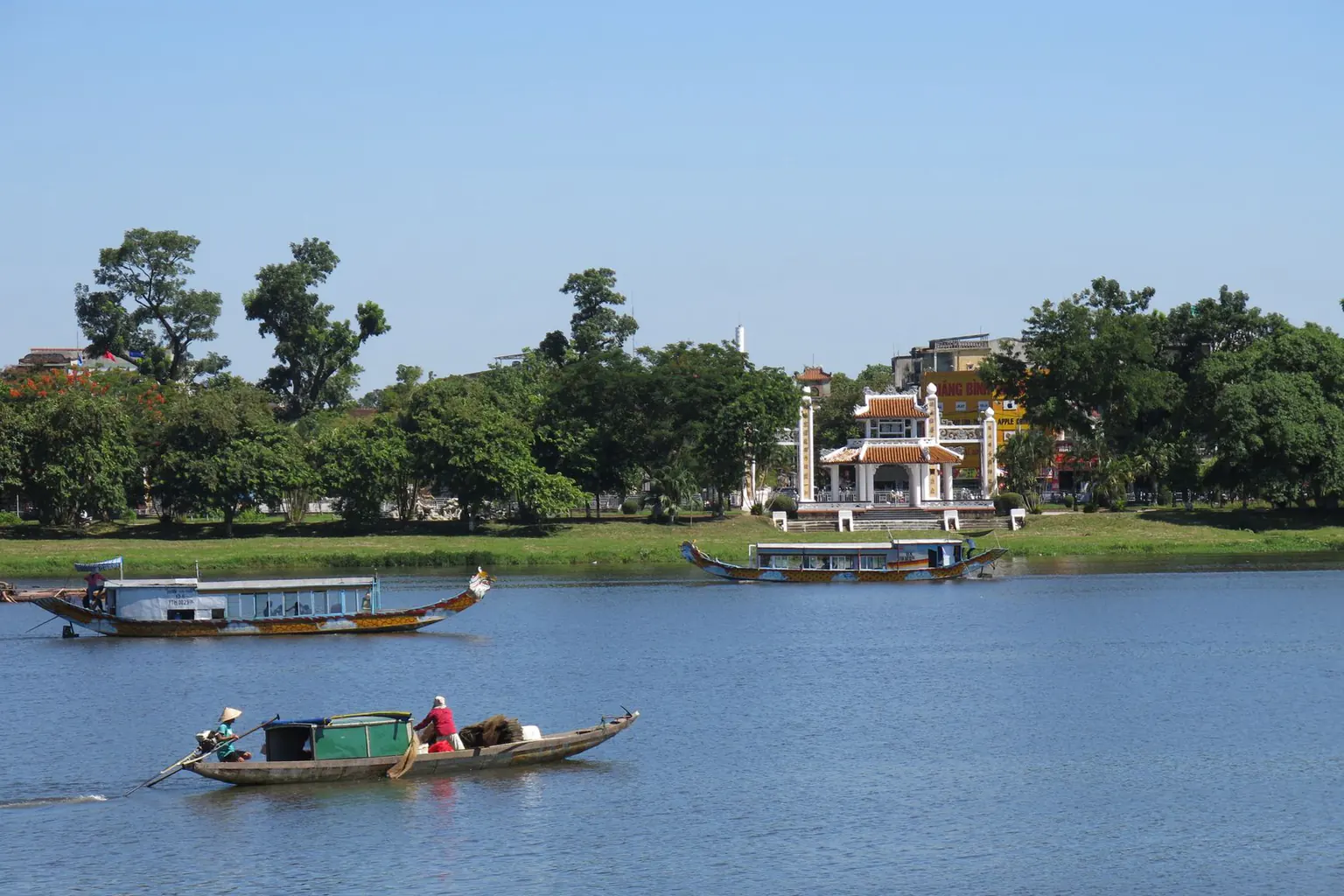
Table of Contents (3 sections)
Perched dramatically on the limestone cliff of Ngoc Tran Mountain overlooking the deep emerald waters of the Perfume River, the Hue Nam Shrine—universally known as Hon Chen Temple (Dien Hon Chen)—is one of the most sacred spiritual centres in Central Vietnam. Over centuries, this sanctuary has fostered a profound cultural synthesis between the ancient Cham veneration of Goddess Po Nagar and the Vietnamese Mother Goddess (Dao Mau) religion. During its spring and autumn festival seasons, thousands of pilgrims, mediums, and spectators gather along the river, transforming the waterways into an extraordinary spectacle of ritual music, colourful dragon boats, and devotional fervor.
Historical significance and festival cycles
Recognised as a National Intangible Cultural Heritage, the Hon Chen Temple Festival occupies a cherished place in the spiritual life of Hue:
1. Two annual lunar festival seasons
The festival does not follow the Gregorian calendar, taking place twice each year according to the lunar calendar:
- Spring Festival (Third Lunar Month): Held from the 2nd to the 4th day of the third lunar month. This seasonal rite opens the year with prayers for national tranquility, favourable weather, and prosperous agricultural harvests.
- Autumn Festival (Seventh Lunar Month): Held from the 8th to the 10th day of the seventh lunar month. This is the grand festival of the year, drawing thousands of devotees, temple delegations, and spiritual mediums from across Vietnam to pay homage to the Holy Mother.
2. Royal patronage under the Nguyen Dynasty
During the reign of Emperor Dong Khanh in the late 19th century, the emperor extensively rebuilt the temple complex and bestowed upon it the official name Dien Hue Nam (“Bestowing Grace upon the Southern Realm”) in gratitude for the Holy Mother’s spiritual protection. Consequently, the Hon Chen festival was elevated from a local folk gathering to an imperial state rite attended by high-ranking court mandarins.
Sacred waterborne rituals on the Perfume River
The defining hallmark that sets the Hon Chen Temple Festival apart from other Mother Goddess ceremonies across Vietnam is its magnificent waterborne procession:
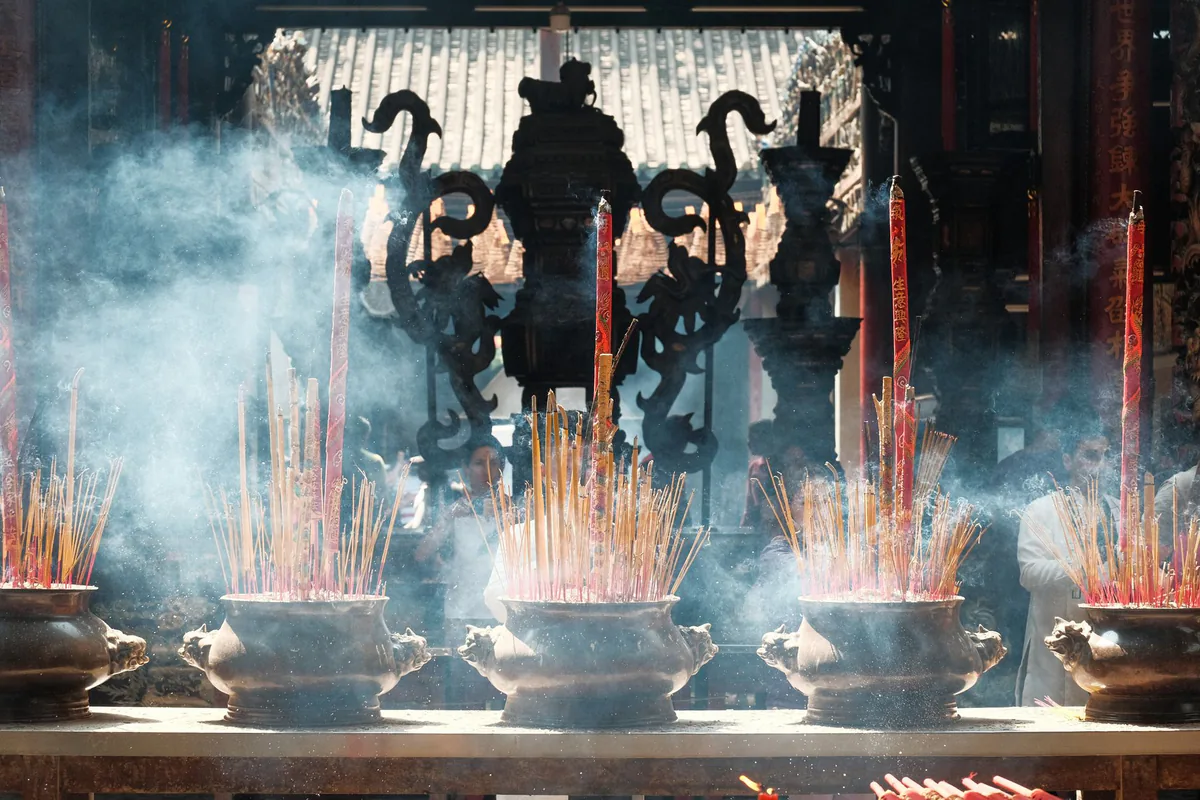
1. The Thuyen Bang dragon boat flotilla
Ceremonies commence with an ornate river procession escorting the Holy Mother’s palanquin from the Thien Tien Holy Temple (at 352 Chi Lang Street) upstream along the Perfume River to Hue Nam Temple:
- The procession features dozens of Thuyen Bang—twin dragon boats lashed together to form wide, buoyant floating platforms adorned with five-element flags, royal parasols, and floral offerings.
- Aboard each vessel, musicians and devotees dressed in vibrant silk ritual robes beat ceremonial drums, sound bronze gongs, and sing ancient devotional chants, creating an unforgettable spectacle along the river.
2. Spirit mediumship (hau dong) and chau van singing
Upon arrival at the temple dock, rituals proceed within the central Minh Kinh Dai pavilion:
- Hau dong (spirit possession) ceremonies continue around the clock, with mediums channeling spirits from the Four Palaces (Tu Phu) pantheon: mandarins, ladies of the court, young princes, and mistresses of the mountains and waters.
- Melodic strains of the two-stringed moon lute (dan nguyet), wooden clappers, and syncopated singing (hat van) captivate onlookers, celebrating traditional values of filial piety, protection, and communal harmony.
Travel navigation and temple etiquette
Due to Hon Chen Temple’s rugged topography—clinging to steep mountain cliffs directly over deep river waters—travel requires thoughtful planning:
- Riverboat route: Visitors can charter traditional dragon boats from Toa Kham Boat Dock or Da Vien Bridge Dock, cruising 8 km upstream along the scenic Perfume River to disembark directly at the temple pier.
- Road route via private car: Vehicles travel via the Hue bypass highway or Minh Mang road toward Huong Tho commune, turning into the village road of Hai Cat. From the car parking area, visitors walk a few hundred metres to take a brief 3-minute local ferry crossing directly to the temple steps.
- Temple decorum and dress code: As an active religious shrine, visitors must dress respectfully. Ensure shoulders and knees are fully covered; avoid tank tops, short skirts, or beachwear. Maintain quiet, reverent decorum in worship halls.
For pilgrimage groups travelling from Da Nang, booking a chauffeured private car from Da Nang to Hue allows your family to travel comfortably, carry offerings with care, and enjoy safe door-to-door coordination.
Starting rates only. Sun Travel checks the pickup and drop-off points, itinerary and departure time before confirming the trip. Fuel, road tolls and parking are included in the listed route rate. Waiting at pickup is free for 30 minutes; waiting beyond 1 hour adds US$4. Extra stops need separate confirmation. Standard private car transfer fare from Da Nang to Hue includes vehicle fuel, highway tolls (including the Hai Van Tunnel), and attentive driver support throughout the pilgrimage.
Travellers can also opt for a customized Hue day tour combining Hon Chen Temple, Thien Mu Pagoda, and Minh Mang Tomb seamlessly along the upstream Perfume River corridor. For a fixed-itinerary option, see the one-day Hue city tour.
Frequently Asked Questions About the Hon Chen Temple Festival
How much is a private car to Hon Chen Temple?
There is no separate listed fare for Hon Chen Temple. The figures below are for the closest listed route, Da Nang → Hue (tunnel BOT toll included): 4-seat car from US$59, 7-seat car from US$68 and 16-seat van from US$95 (including fuel, road tolls and parking). The fare for Hon Chen Temple is quoted after checking your pickup and drop-off points, itinerary and departure time.
On which lunar dates is the Hon Chen Temple Festival held?
The festival takes place biannually: the Spring Festival runs from the 2nd to the 4th day of the third lunar month, while the major Autumn Grand Festival occurs from the 8th to the 10th day of the seventh lunar month.
Can vehicles drive directly onto the grounds of Hon Chen Temple?
No. The temple sits on a steep river cliff. Cars park in the designated lot in Hai Cat village across the river, from where visitors take a brief 3-minute sampan ferry ride across the water to reach the entrance.
Are international travellers allowed to observe the spirit mediumship rituals?
Yes. The festival welcomes respectful pilgrims and curious travellers to observe the ritual chants, boat processions, and mediumship dances, provided visitors maintain quiet, polite decorum.
What dress code is required when visiting Hon Chen Temple?
Modest and respectful clothing is mandatory. Long trousers, long dresses, or traditional Vietnamese Ao Dai covering shoulders and knees are required before entering worship sanctuaries.
📚 More Travel Guides