Dress Code and Cultural Etiquette Guide for Hue Imperial Citadel, Royal Tombs, and Pagodas
Ancestral shrines inside the Hue Imperial Citadel, worship pavilions at the Nguyen Dynasty royal tombs, and Thien Mu Pagoda enforce respectful dress standards year-round. Knowing what clothing is required at interior halls—and keeping a light change of clothes or sarong inside your private vehicle—ensures smooth entry at every monument.
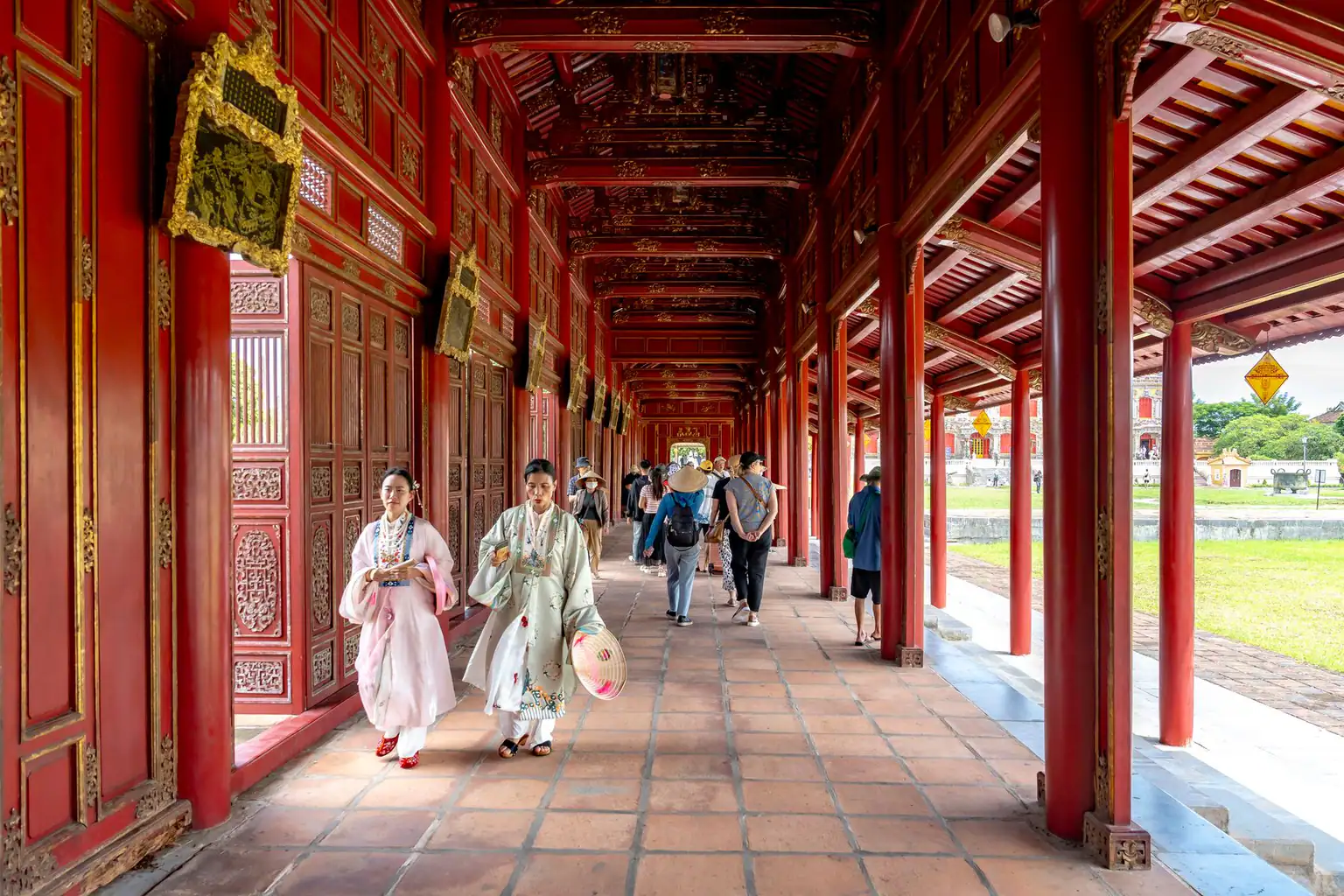
Table of Contents (4 sections)
Travelling by private 4-, 7-, or 16-seat car from Chan May Port to Hue’s Imperial Citadel, Thien Mu Pagoda, and royal mausoleums makes managing temple dress codes effortless because extra layers and walking shoes stay right inside your vehicle trunk. Your driver drops your party at the closest monument parking zones so everyone can change from breezy coastal attire into modest palace-ready clothing before approaching the ticket gates.
Where Dress Code Rules Are Enforced Across Hue’s Heritage Sites
The Hue Monuments Conservation Centre enforces modest attire guidelines across all UNESCO World Heritage sites in Phu Xuan Ward (including the Imperial Citadel and Thien Mu Pagoda) as well as the royal mausoleum complexes situated in the southern wards of Hue City across the Perfume River. Security staff stationed at ticket gates and palace thresholds check that visitors’ shoulders and knees are covered before entering sacred worship halls.
When planning a Chan May Port to Hue private car excursion or combining coastal stops on a Chan May Port – Hai Van Pass – Da Nang – Hoi An 1-day tour, it helps to separate your wardrobe needs by zone:
- Inside the Imperial Citadel, Royal Tombs, and Thien Mu Pagoda: Wear tops with sleeves covering the shoulders and pants, capris, or skirts that extend below the knee. Tank tops, strapless tops, and short athletic shorts are not permitted inside worship halls.
- Along Lang Co Bay, Lap An Lagoon, and Hai Van Pass: Casual resort wear, shorts, and sundresses are completely fine for coastal boardwalks, seafood restaurants, and mountain overlooks.
Dress Code and Etiquette Requirements by Monument Type
Use the quick-reference table below to pack the right clothing and footwear for each stop on your Hue itinerary:
| Heritage Site | Clothing Requirement (Shoulders & Knees) | Interior Hall Etiquette | Recommended Footwear |
|---|---|---|---|
| Thai Hoa Palace & The Mieu Temple (Imperial Citadel) | Sleeved shirts or blouses; trousers, capris, or skirts reaching below the knee | Remove hats and sunglasses inside; observe “No Photography” signs inside sacred inner sanctums | Breathable walking sneakers or cushioned sandals for expansive brick courtyards |
| Thien Mu Pagoda & Tu Hieu Pagoda | Modest sleeved tops and knee-covering bottoms; avoid sheer or low-cut garments | Speak softly near monk quarters; slip off shoes before stepping onto the main prayer hall mat | Slip-on walking shoes or sandals that are easy to remove at temple doors |
| Khai Dinh Tomb (Thien Dinh Palace) | Covered shoulders and knees required to enter the upper porcelain-mosaic throne room | Do not lean on carved stone dragons or touch the intricate glass-and-ceramic wall reliefs | Supportive shoes with good grip for climbing the 127 steep stone steps |
| Tu Duc Tomb & Minh Mang Tomb | Knee-length bottoms and sleeved tops required at central worship pavilions | Stay on marked stone paths around pine gardens and lotus ponds | Comfortable walking shoes for shaded garden trails |
Using Your Private Car for Ao Dai Photo Shoots and Wardrobe Changes
Many visitors love wearing traditional Vietnamese Ao Dai tunics or royal court costumes for photographs along the red-lacquered corridors of the Forbidden Purple City, yet prefer lighter clothing for midday dining and coastal drives. Travelling by private car makes managing two outfits effortless:
- Store Ao Dai garments and props safely in the trunk: Wear light, breathable cotton or linen clothing that meets the knee-and-shoulder rule during your morning drive from Chan May Port, or change into your Ao Dai at the clean visitor facilities near Ngo Mon Gate.
- Switch back into casual resort attire before coastal stops: Once you finish touring the Imperial Citadel, Thien Mu Pagoda, and the royal tombs, you can slip on shorts or beachwear for your afternoon stop at Lap An Lagoon and Lang Co Beach without carrying extra bags around the monuments.
- Keep a lightweight sarong or linen shawl in the cabin: Packing one or two large scarves or zip-off travel trousers inside your vehicle makes it easy for everyone in your group to meet the dress code at pagoda and temple gates.
For cultural etiquette tips covering My Son Sanctuary, Po Nagar Cham Towers, and Central Highlands villages, see our South-Central Vietnam and Central Highlands road trip handbook.
Photography Rules and Respectful Conduct at Royal Sanctuaries
Beyond dress standards, following a few simple local customs ensures a welcoming experience across Hue’s historic monuments:
- Respect indoor photography restrictions at Thai Hoa Palace and The Mieu: Outdoor gates, courtyards, and covered corridors are completely open for photography, but interior altar halls housing royal ancestral tablets prohibit cameras and flash to protect centuries-old gold lacquerwork.
- Do not launch drones without prior official permits: The Hue Imperial Enclosure and royal mausoleums are protected airspace zones; unlicensed recreational drone flights are strictly prohibited.
- Maintain a quiet tone around active monastic grounds: Both Thien Mu Pagoda and Tu Hieu Pagoda are active Buddhist monasteries where resident monks study and chant daily.
Frequently Asked Questions: Hue Dress Code & Cultural Etiquette
What is the starting price of a private car from Chan May Port to visit the Hue Imperial Citadel, Thien Mu Pagoda and royal tombs?
Current starting rates for Chan May Port → central Hue: 4-seat car from US$40, 7-seat car from US$47 and 16-seat van from US$70. The listed price includes fuel, road tolls and parking; Sun Travel quotes the final fare based on your pickup and drop-off points, itinerary and departure time.
Do young children also have to wear long pants inside the Hue Imperial Citadel and royal tombs?
Children under 10 are fine wearing neat, comfortable knee-length shorts and T-shirts so they can stay cool while walking. The strict below-the-knee and covered-shoulder rules apply primarily to adults and teenagers.
What happens if someone in our group arrives at the Hue Citadel wearing shorts above the knee?
Wrap-around sarongs and loose cotton trousers can be rented or purchased at visitor stalls near the main ticket gates, though keeping a spare pair of light pants or a long wrap inside your private car is much faster and more convenient.
Can we leave our change of clothes, camera bags, and shopping inside the private car while visiting the monuments?
Yes. Your Sun Travel driver locks the vehicle and remains in the official monument parking area throughout your visit, keeping your extra clothing, daypacks, and souvenirs completely secure.
Are entrance tickets to the Hue Imperial Citadel and royal tombs included in the private car price?
Private car rates cover the dedicated vehicle, driver, fuel, road tunnel tolls, and parking fees. Sightseeing entrance tickets are paid separately at the official ticket counter so your group can choose individual tickets or money-saving combo passes based on the exact tombs you visit.
📚 More Travel Guides