Da Nang First-Time Visitor Guide: Geography and Travel Legs
Since July 2025, Da Nang encompasses the former Quang Nam province. Learn how to navigate the coastal urban core, regional transit hubs, and day trip distances.
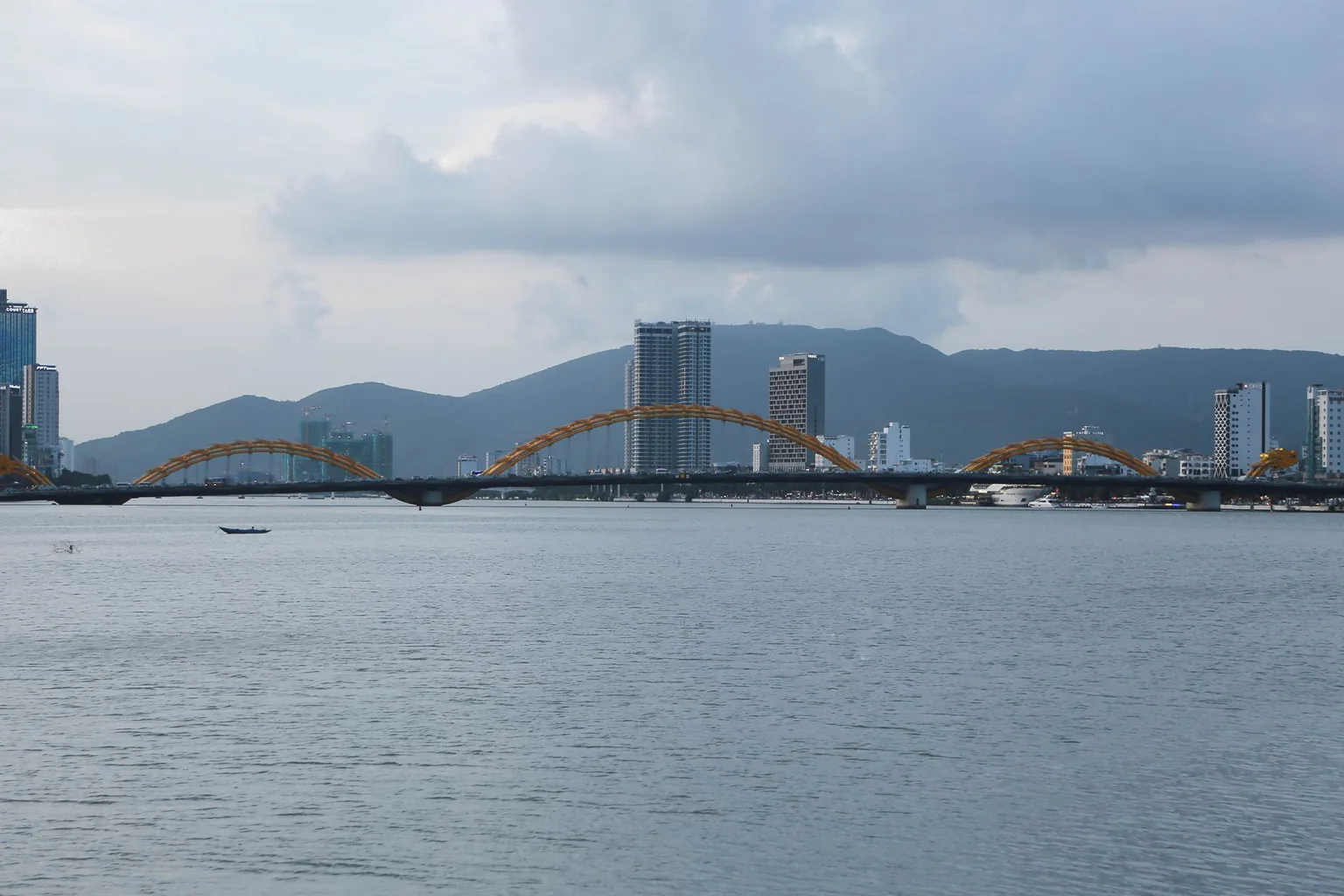
Table of Contents (5 sections)
When organizing your first trip, it is helpful to conceptualize “Da Nang” across three distinct layers: the modern coastal urban core where flights arrive, the prominent perimeter destinations reachable on simple day trips (Marble Mountains, Ba Na Hills, Hai Van Pass), and the wider regional centers that now share the same consolidated municipal boundaries but sit further afield (Hoi An, Tam Ky, My Son). The data points below were cross-referenced on October 4, 2026; travel durations and distances are drawn from Sun Travel’s standard rate schedule as reference benchmarks.
The Scope of “Da Nang” Following the July 2025 Administrative Merger
Under National Assembly Resolution 202/2025/QH15 dated June 12, 2025, the former province of Quang Nam was integrated into Da Nang City, with the unified administrative model taking effect on July 1, 2025. For travelers, this means a single municipal title now encompasses several geographically distinct localities:
| When referring to | In this guide understood as | Dedicated guide |
|---|---|---|
| Urban core along the Han River, coastal beaches, Marble Mountains, Ba Na, Hai Van | Da Nang urban area, the primary focus of this guide | Things to do in Da Nang by interest |
| Hoi An | Three wards (Hoi An, Hoi An Dong, Hoi An Tay) and Tan Hiep Island Commune under Da Nang City, per Bao Van Hoa (December 8, 2025) | First time in Hoi An |
| Tam Ky | Four wards (Tam Ky, Quang Phu, Huong Tra, Ban Thach) established under Resolution 1659/NQ-UBTVQH15 | First time in Tam Ky |
| My Son Sanctuary | Physical address recorded as “Thu Bon Commune, Da Nang City” on the official heritage management portal | Hoi An to My Son private car travel guide |
| Hue | Separate centrally governed city since January 1, 2025; independent from Da Nang | First time in Hue |
Geographic Distances to Organize Your Travel Legs
Sun Travel’s rate schedule records standard one-way travel markers from downtown Da Nang as detailed below. Dispatch confirms final travel plans based on travel dates and pickup or drop-off points, with actual driving times subject to real-time traffic.
| Destination | Rate schedule reference | Practical planning context |
|---|---|---|
| Da Nang International Airport | 5 km, 15 minutes | Two passenger terminals: T1 domestic and T2 international (airport authority data) |
| Marble Mountains (Ngu Hanh Son) | Vietnam.travel cites approx. 15 minutes from city center | Cluster of five karst limestone hills featuring caves, pagodas, and panoramic view stairs |
| Ba Na Hills | 35 km, 45 minutes | Dedicated full-day outing; admission ticketing and cable car schedules set by operator |
| Hoi An | 30 km, 40 minutes | Belongs to same expanded city territory but addressed as separate guide |
| Tam Ky | 70 km, 1.5 hours | Convenient waypoint between Hoi An and Quang Ngai |
| Hue | 100 km, 2.5 hours | Traversed via tunnel or Hai Van Pass; see Da Nang to Hue route comparison: pass vs tunnel |
For airport transit, our practical guide on Da Nang Airport to city center transfers reviews terminal arrival gates and optimal vehicle sizing.
Da Nang as the Central Regional Transit Hub
According to Vietnam.travel, Da Nang International Airport handles numerous domestic flights daily alongside an expanding network of direct international connections; national north-south rail lines and express highway coaches pass directly through the city, and urban areas offer abundant metered taxis and ride-hailing services. The same official portal lists Hoi An and Hue as primary neighboring highlights. For this reason, many Central Vietnam travel itineraries utilize Da Nang as a stable base for arrival and departure rather than changing hotel rooms every night. This approach works best when daily driving legs remain manageable: traveling 100 km to Hue represents a fundamentally different time commitment than driving 30 km to Hoi An.
Travel Seasons and Weather Considerations
Vietnam.travel notes that March to May and September to October bring warm, favorable conditions, June to August features low rainfall with clear, calm seas, and the main rainy season extends from November through February. Regional meteorological reports indicate that Central Vietnam’s tropical storm season typically concentrates between September and December, with peak rainfall during October and November. These observations are complementary: early autumn can offer pleasant temperatures but still carry storm possibilities, making it essential to monitor weekly meteorological bulletins. Our practical guide on Central Vietnam storm season and schedule management outlines how to adjust your plans during inclement weather.
Further Reading by Travel Objective
- Choosing activities by personal interest: Things to do in Da Nang by interest.
- Exploring city highlights with a chauffeured private car: Da Nang city highlights one-day car tour.
- Exploring traditional crafts across Da Nang: Traditional crafts and heritage villages in Da Nang.
- Airport private transfers: Da Nang airport transfer.
Frequently Asked Questions About Visiting Da Nang for the First Time
What administrative areas currently make up Da Nang City?
Effective July 1, 2025, under National Assembly Resolution 202/2025/QH15, Da Nang City incorporates the former territory of Quang Nam Province. Hoi An (three wards and Tan Hiep Island Commune), Tam Ky (four wards), and My Son Sanctuary fall within this unified municipal boundary; Hue remains an independent centrally governed city.
How far is Da Nang Airport from the city center and how many terminals does it operate?
Sun Travel's rate schedule records approximately 5 km and 15 minutes of driving between downtown Da Nang and the airport. The airport operates two terminals: Terminal 1 for domestic flights and Terminal 2 for international arrivals. Driving times vary with traffic conditions.
How long does driving from Da Nang to Hoi An and Hue take?
Standard rate markers record Da Nang to Hoi An at roughly 30 km and 40 minutes, and Da Nang to Hue at about 100 km and 2.5 hours. These represent reference driving durations; dispatch confirms exact timings based on departure points and whether traveling via Hai Van Pass or the road tunnel.
Which months are recommended for visiting Da Nang?
Vietnam.travel notes March to May and September to October offer warm weather, while June to August sees minimal rain. Central Vietnam's rainy and storm season typically concentrates between September and December, so check short-term forecasts rather than relying solely on monthly averages.
Is hiring a private car necessary when visiting Da Nang?
It is not mandatory. Vietnam.travel observes that the city has ample metered taxis and ride-hailing services. A private car with driver becomes advantageous when visiting multiple out-of-town stops in a day, carrying heavy luggage, or traveling as a group, with fixed quotes for 4, 7, or 16-seater vehicles.
📚 More Travel Guides